
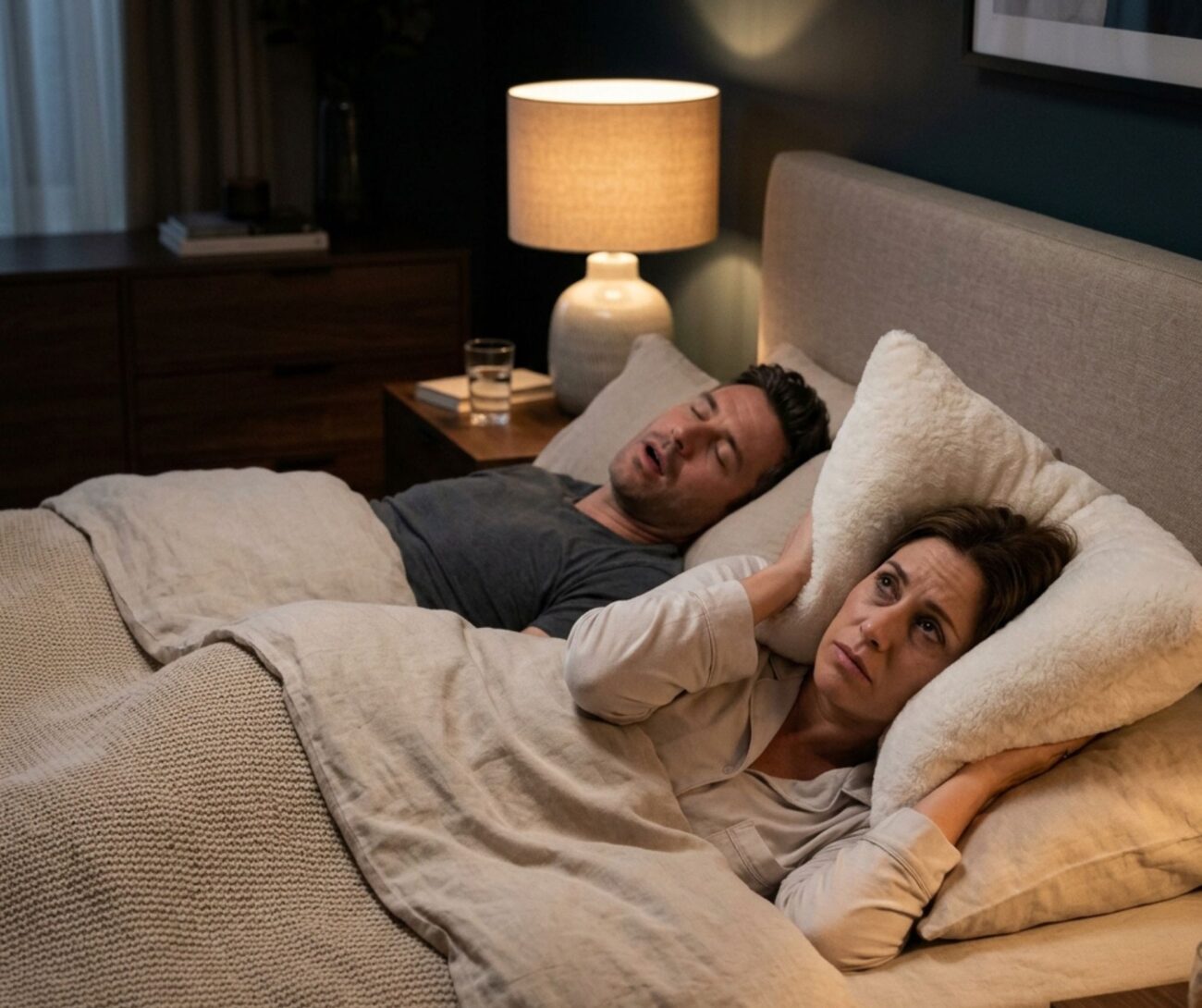
Snoring can disrupt your sleep, affect your partner’s rest, and sometimes signal an underlying health issue. Learning how to stop snoring starts with understanding its causes, including poor sleeping posture, excess weight, nasal congestion, or relaxed throat muscles. Fortunately, many people can reduce or eliminate snoring by making simple lifestyle changes and improving their bedtime habits.
From maintaining a healthy weight to using effective sleep position techniques and treating nasal congestion, these practical solutions can improve sleep quality and support better airway health. This guide explores proven tips, common causes, and effective remedies to help you enjoy quieter nights and wake up feeling refreshed every morning.
Is It Just a Habit or a Sign of Sleep Apnea?
Not all snoring is the same. Some people snore lightly and it means nothing serious. Other people snore loudly every night, and this can be a sign of sleep apnea, which is a real sleep disorder. Sleep apnea symptoms include gasping for air at night, long pauses in breathing, and waking up feeling like you never slept at all. This condition is called obstructive sleep apnea (OSA), and it happens when the airway becomes blocked repeatedly during sleep.
Doctors say that if snoring comes with morning headaches, daytime fatigue, or loss of concentration at work, it is time to see a sleep specialist. According to Dr. Stirneman of Sleep Better Illinois, “Snoring should never be ignored, especially when it is paired with tiredness during the day. It could be a sign of a much larger breathing problem at night.” A simple sleep study, also called polysomnography, can confirm whether your snoring is harmless or a sign of airway obstruction that needs treatment.
| Type of Snoring | Signs | Action Needed |
| Simple Snoring | Occasional sound, no daytime tiredness | Try home remedies |
| Sleep Apnea Related | Gasping, choking, pauses in breathing | See a doctor immediately |
| Chronic Loud Snoring | Every night, disturbs others | Book a sleep study |
Small Lifestyle Changes That Make a Big Difference
Before jumping to devices or surgery, small changes in your daily routine can reduce snoring a lot. Alcohol and snoring are closely linked. Alcohol relaxes the muscles in your throat, including the throat muscles relaxation that leads to snoring. The same goes for sedatives effect on breathing, since sleeping pills and muscle relaxants can slow down your breathing and make your throat collapse more easily during sleep.
Smoking and sleep also do not mix well. Smoking irritates the lining of your nose and throat, which causes swelling and blocks airflow. This makes a narrow airway even narrower. Cutting back on alcohol, avoiding sedatives close to bedtime, and quitting smoking are three of the easiest stop snoring remedies available. Treating nasal congestion with saline sprays or a humidifier can also open up your airway naturally, without needing any medicine.
Best Sleep Positions to Reduce Snoring
The position you sleep in matters more than most people realize. Sleep positions, especially side vs. back sleeping, can change how much you snore in one night. When you sleep on your back, gravity pulls your tongue and soft palate backward into your throat. This blocks airflow and causes snoring. Side sleeping keeps your airway more open and reduces the vibration that causes noise.
Many people find it hard to stay on their side all night. A simple trick is to sew a tennis ball into the back of a shirt, so rolling onto your back feels uncomfortable. Wedge pillows or raising the head of your bed can also help keep your airway open. These are low-cost changes, but they are some of the most effective stop snoring remedies for people whose snoring is linked only to position.
Do Nasal Dilators and Nasal Strips Actually Work?
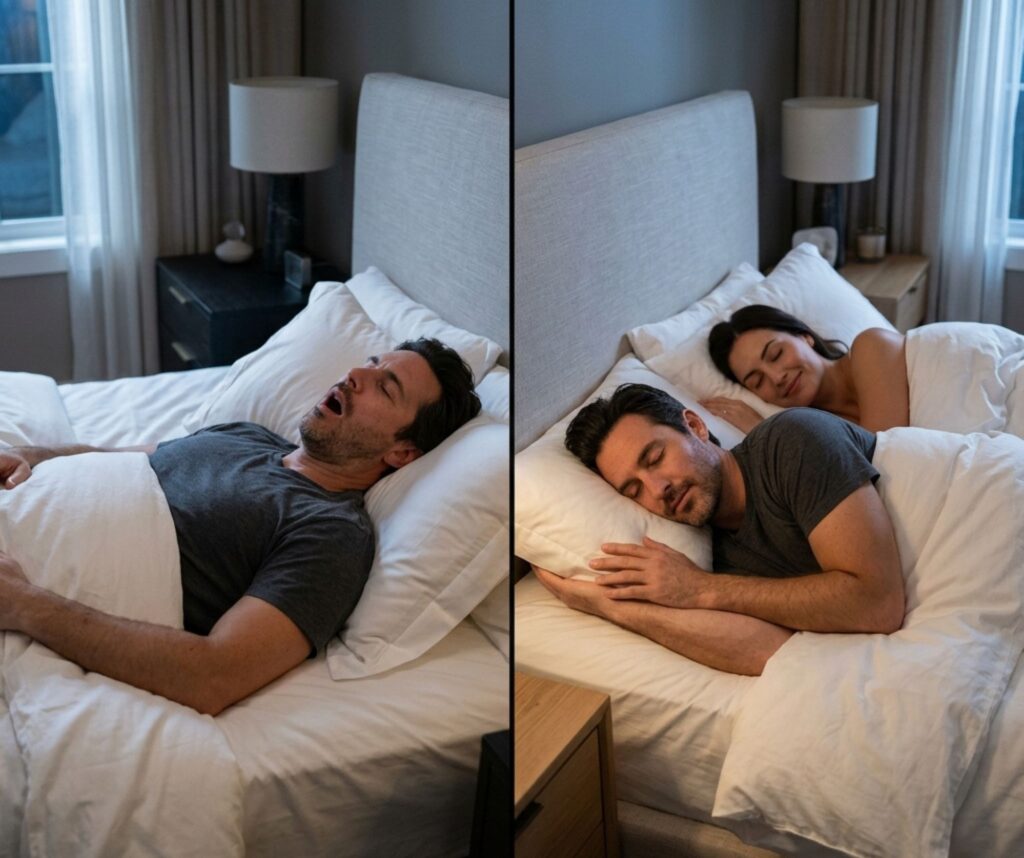
Many people ask if nasal strips and nasal dilator products really work, and the answer depends on the cause of your snoring. Nasal strips stick to the outside of your nose and gently pull the nostrils open. A nasal dilator works from the inside, holding the nasal passage open with a small plastic or silicone device. Both tools are designed to reduce nasal congestion and make it easier to breathe through your nose instead of your mouth.
These products work best for people whose snoring comes from a blocked or narrow airway in the nose, not the throat. If your snoring is caused by throat tissue or excess weight/fat in neck, these tools may not help much. Still, they are cheap, easy to try, and safe for most people. Many users report noticeably quieter nights within the first week of use.
| Product | How It Works | Best For |
| Nasal Strips | Pulls nostrils open from outside | Mild nasal blockage |
| Nasal Dilator | Widens nasal passage from inside | Congestion-related snoring |
| Saline Spray | Clears mucus and swelling | Allergy-related snoring |
Lose Weight, Reduce Snoring
Carrying excess weight/fat in neck area is one of the biggest causes of snoring in adults. Extra tissue around the neck and throat presses on the airway, making it narrower and easier to collapse during sleep. This is why weight loss is often one of the most powerful stop snoring remedies for people who are overweight. Even losing a small percentage of body weight can lead to a noticeable drop in snoring.
Diet and exercise for sleep apnea go hand in hand. Doctors often recommend a mix of cardio exercise and a balanced diet low in processed sugar. This not only helps with weight but also improves overall breathing health. A larger neck size is directly linked to a higher risk of sleep apnea, so tracking your neck measurement over time can be a useful way to see progress alongside the number on the scale.
Why Getting Enough Sleep Matters
Sleep deprivation makes snoring worse. When you do not get enough rest, your body goes into a deeper, heavier sleep the next night to catch up. This deeper sleep causes your throat muscles relaxation to increase, which leads to louder and more frequent snoring. Poor sleep habits create a cycle that is hard to break without fixing your sleep schedule.
Good sleep hygiene means going to bed and waking up at the same time every day, avoiding screens before bed, and keeping your bedroom cool and dark. The Centers for Disease Control and Prevention recommends 7 to 9 hours of sleep for adults. Without enough rest, people also face daytime fatigue, loss of concentration, and in serious cases, even falling asleep while driving. Fixing your sleep schedule is a simple but powerful step toward quieter, healthier nights.
How Snoring Affects Partners
Snoring does not just affect the person making the noise. Partner’s snoring is one of the top reasons couples report poor sleep quality, arguments, and even separate bedrooms, sometimes jokingly called a “sleep divorce.” One partner may lose hours of sleep every night just from lying next to someone who snores loudly.
Simple tools like white noise machines or ear plugs can help partners get through the night while the snorer works on long-term solutions. Open communication is also important. As Dr. Stirneman notes, “Snoring is a shared problem, not just one person’s issue. Couples who talk about it openly find solutions faster than those who stay silent about it.” Addressing snoring early can protect both people’s health and the relationship itself.
Mouthguards and Oral Appliances
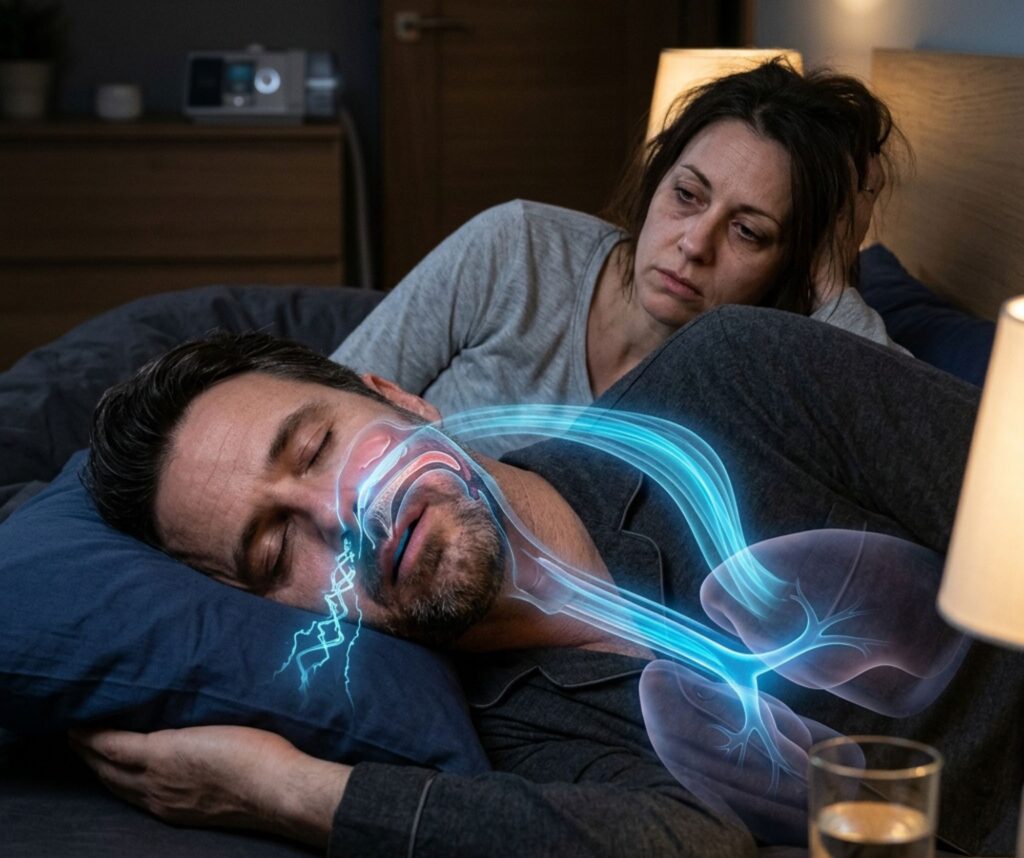
A mouthguard for snoring is a small device worn in the mouth during sleep. It works by gently repositioning the jaw and tongue to keep the airway open. This type of treatment is known as oral appliance therapy, and it is often recommended for people with mild to moderate snoring or sleep apnea.
Many dentists now specialize in this area, a field known as sleep dentistry. A dentist can create a custom-fitted oral device that is far more comfortable and effective than store-bought versions. These devices are a great middle option between simple home remedies and more intense treatments like CPAP machines or surgery, especially for people who cannot tolerate a full breathing mask at night.
CPAP Machines and Surgery
For moderate to severe sleep apnea, a CPAP machine is often the most effective treatment available. CPAP stands for CPAP (Continuous Positive Airway Pressure), and it works by delivering a steady stream of air through a sleep apnea mask worn over the nose or mouth. This constant airflow keeps the airway from collapsing during sleep, which stops both snoring and dangerous breathing pauses.
When other treatments fail, sleep apnea surgery may be considered. Surgical options can involve removing extra tissue from the throat, correcting a deviated septum in the nasal passage, or repositioning the jaw. These procedures are usually a last resort, recommended only after a primary care doctor or sleep specialist confirms that lifestyle changes and devices have not worked. A proper diagnosis through a sleep study is always the first step before considering surgery.
Final Thoughts on How to Stop Snoring
Snoring can range from a harmless habit to a sign of a serious sleep disorder. The good news is that there are stop snoring remedies for almost every level of severity. Start with small changes like adjusting your sleep positions, cutting back on alcohol, and improving your sleep hygiene. If those do not work, try nasal strips, a nasal dilator, or a mouthguard for snoring. For more serious cases, a CPAP machine or sleep apnea surgery may be needed.
The most important step is not staying silent about the problem. Talk to a primary care doctor or a sleep specialist, especially if you notice morning headaches, daytime fatigue, or trouble concentrating during the day. With the right approach, both you and your partner can finally enjoy quiet, restful sleep every night.
Quick Reference Table: Top 10 Tips to Stop Snoring
| Tip Number | Solution | Best For |
| 1 | Reduce alcohol and sedative use | Throat-related snoring |
| 2 | Treat nasal congestion | Congestion-related snoring |
| 3 | Quit smoking | Irritated airway tissue |
| 4 | Sleep on your side | Position-related snoring |
| 5 | Try nasal strips or dilators | Mild nasal blockage |
| 6 | Lose excess weight | Neck fat related snoring |
| 7 | Improve sleep schedule | Sleep deprivation related snoring |
| 8 | Use white noise or ear plugs | Partners of snorers |
| 9 | Try an oral appliance | Mild to moderate sleep apnea |
| 10 | Use CPAP or consider surgery | Moderate to severe sleep apnea |
