
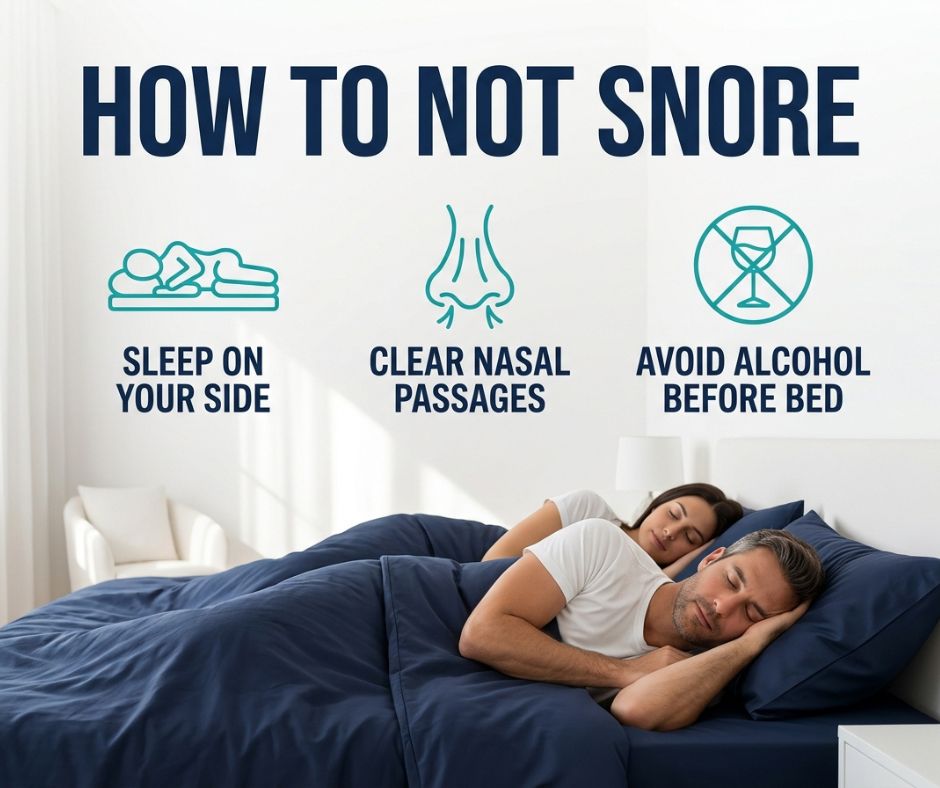
Getting a good night’s sleep should leave you refreshed. However, loud snoring can disturb your rest and affect everyone around you. Many people search for How to Not Snore because they want better sleep without depending on complicated treatments. Snoring happens for many reasons, ranging from simple lifestyle habits to medical conditions. Understanding the real cause is the first step toward lasting relief. This guide explains snoring causes, proven snoring remedies, medical treatments, and practical ways to enjoy quality sleep. You will also learn when Sleep apnea may be involved and when professional care becomes the safest choice.
| Quick Facts About Snoring | Details |
| Adults who snore | Millions of Americans experience occasional or regular snoring |
| Common cause | Narrowed breathing passage during sleep |
| Main symptom | Vibrating throat tissues producing noise |
| Serious concern | Sleep apnea may interrupt breathing |
| Goal | Better breathing and restful sleep |
What Is Snoring and Why Does It Happen?
Snoring is the sound created when air struggles to move through the Upper airway while you sleep. The restricted airflow causes Soft tissue vibration inside the throat. This vibration produces the familiar rumbling or rattling sound. Your tongue, palate, and Throat tissues relax during sleep. If these tissues narrow the airway, breathing becomes noisy. This explains Why do people snore and why learning How to Not Snore begins with understanding what happens inside the throat.
The airway becomes even narrower because of Nasal congestion, extra Neck fat, Alcohol consumption, Smoking, or relaxed muscles caused by Sleeping pills. Your normal Sleep cycle also affects muscle relaxation. During deeper sleep stages, muscles loosen more, making snoring louder. Some people snore only occasionally, while others experience Chronic snoring every night. Although many cases are harmless, frequent snoring should never be ignored because it sometimes points toward Sleep apnea or another breathing disorder.
| Step | What Happens |
| 1 | Air enters the nose or mouth |
| 2 | Airway becomes narrow |
| 3 | Air moves through restricted space |
| 4 | Throat tissues begin vibrating |
| 5 | Snoring sound develops |
Common Causes of Snoring
Many everyday habits contribute to Snoring causes. Excess body weight is among the leading reasons because additional Neck fat places pressure around the airway. Sleeping flat on your back also allows the tongue to fall backward, creating Airway obstruction. People with Chronic allergies often develop Mucus buildup, making breathing through the nose more difficult. Nasal congestion, sinus infections, colds, and seasonal allergies all increase resistance inside the nose. These problems force breathing through the mouth, which usually produces louder snoring.
Lifestyle choices also play a major role. Regular Alcohol consumption relaxes muscles around the throat before bedtime. Smoking irritates the airway and causes swelling that narrows breathing passages. Certain Sleeping pills relax throat muscles too much, making snoring worse. Aging naturally weakens muscle tone, while Misaligned teeth may affect jaw position and airflow during sleep. Even dehydration thickens mucus and increases airway resistance. Understanding What causes snoring helps you identify which habits deserve attention before seeking medical treatment.
Common Risk Factors
| Risk Factor | Effect on Snoring |
| Weight loss needed | Reduces pressure around the airway |
| Nasal congestion | Restricts airflow |
| Smoking | Swells airway tissues |
| Alcohol consumption | Relaxes throat muscles |
| Sleeping pills | Increase muscle relaxation |
| Misaligned teeth | May reduce airway space |
| Chronic allergies | Cause Mucus buildup |
| Back sleeping | Increases airway collapse |
Types of Snoring – Which One Do You Have?
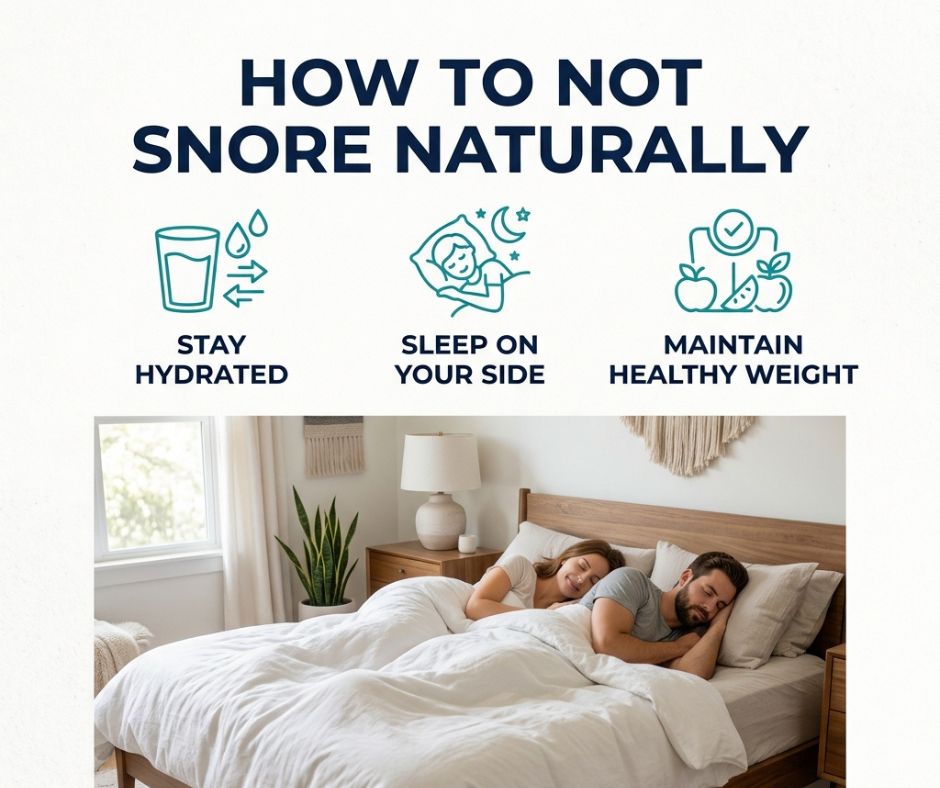
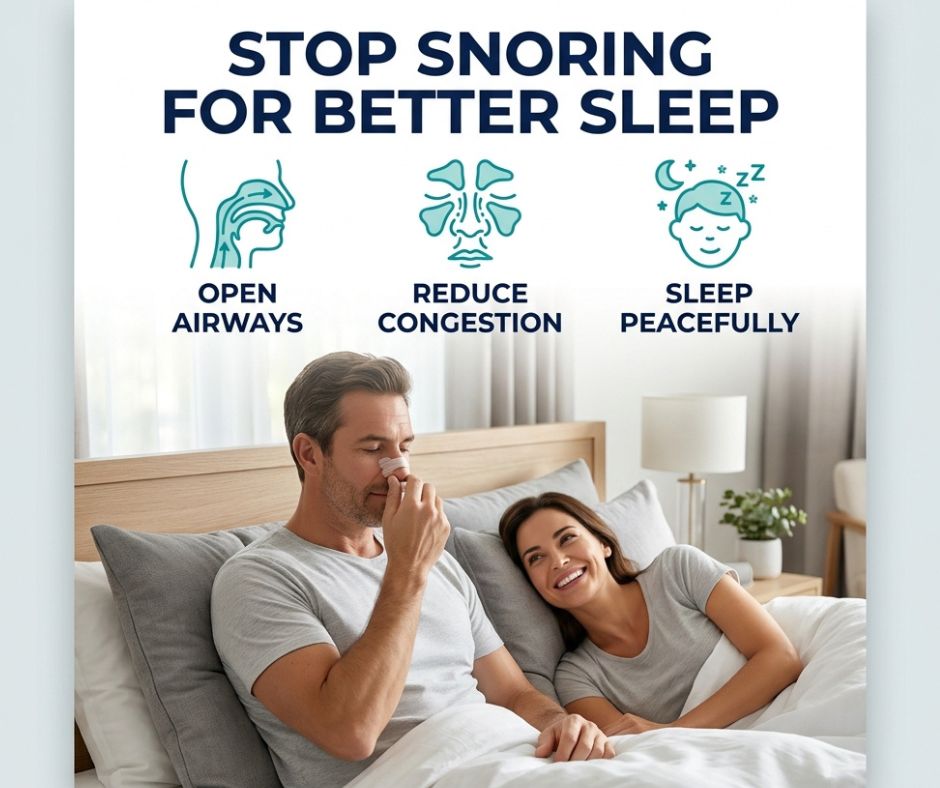
Not every snore has the same cause. Some people snore because of blocked nasal passages, while others experience problems deeper inside the throat. Nasal snoring often develops from Nasal congestion, allergies, or a deviated septum. Many people improve breathing with Nasal strips or a Nasal dilator, which gently open the nostrils during sleep. Mouth snoring usually happens when the mouth remains open throughout the night. Simple changes in Sleep position, especially Side sleeping, often reduce this type of snoring.
Tongue-based and throat-based snoring tend to produce louder sounds. These forms usually occur when the tongue or soft tissues block airflow. Persistent Chronic snoring deserves closer attention because it may signal Sleep apnea. Some patients benefit from an Oral appliance or custom Dental appliances designed to keep the airway open. Others may require orthodontic treatment such as Invisalign orthodontics or Invisalign if jaw alignment contributes to breathing problems. Finding the correct snoring type makes treatment much more successful.
Types of Snoring Comparison
| Type | Common Cause | Possible Solution |
| Nasal | Nasal congestion | Nasal strips, Nasal dilator |
| Mouth | Mouth breathing | Better Sleep position |
| Tongue | Tongue falls backward | Oral appliance |
| Throat | Soft tissue vibration | Medical evaluation |
| Mixed | Multiple causes | Full Sleep study |
Is Snoring a Sign of a Health Problem?
Many people ask, Is snoring a sign of sleep apnea? The answer is sometimes yes. Ordinary snoring usually causes noise without stopping breathing. Sleep apnea, however, repeatedly interrupts breathing during sleep because of severe Airway obstruction. These pauses lower oxygen levels and disturb the normal Sleep cycle. People often wake feeling tired even after spending eight hours in bed. Morning headaches, poor concentration, and daytime sleepiness are common warning signs that should never be ignored.
Doctors often recommend a professional Sleep study to confirm whether Sleep apnea is present. Treatment may include a CPAP machine, custom Dental appliances, or an Oral appliance provided by a qualified Sleep apnea dentist. In severe situations, Airway surgery may improve breathing by removing excess tissue. Modern treatments like Fotona NightLase have also become popular because they tighten soft tissues without traditional surgery. According to Dr. Madhuri Vanama at Discovery Dental Clinic in Issaquah, WA, many patients first benefit from a thorough Sleep apnea consultation, allowing specialists to choose the safest and most effective treatment instead of guessing.
Signs That Require Medical Evaluation
| Symptom | Possible Meaning |
| Very Loud snoring | Possible airway narrowing |
| Breathing pauses | Sleep apnea |
| Morning headaches | Poor nighttime oxygen |
| Daytime fatigue | Interrupted Sleep cycle |
| Gasping during sleep | Serious Airway obstruction |
| High blood pressure | Possible untreated Sleep apnea |
Immediate Tips to Stop Snoring Tonight
If you want to learn How to Not Snore tonight, begin with simple changes that improve airflow before you fall asleep. Your Sleep position makes a big difference. Side sleeping prevents your tongue from falling backward and reducing the Upper airway. Sleeping with your head slightly raised also helps air move freely through your nose and throat. If you have Nasal congestion, using Nasal strips or a Nasal dilator can improve breathing within minutes. These small adjustments often reduce Soft tissue vibration and encourage quality sleep.
Hydration is another easy solution that many people overlook. Drinking enough water keeps Throat tissues moist and reduces Mucus buildup that may block breathing. Avoid Alcohol consumption and Sleeping pills for several hours before bedtime because both relax throat muscles too much. If allergies are making breathing difficult, treating Chronic allergies before bed may reduce swelling inside the nose. These simple habits answer the common question, How to stop snoring immediately, and they often provide noticeable improvement after only one night.
| Tonight’s Quick Fix | Benefit |
| Side sleeping | Keeps airway open |
| Nasal strips | Improves nasal airflow |
| Nasal dilator | Widens nostrils |
| Drink water | Reduces Mucus buildup |
| Avoid Alcohol consumption | Less throat relaxation |
| Raise your head | Better airflow |
Long-Term Lifestyle Changes to Reduce Snoring
Learning How to Not Snore is easier when healthy habits become part of your daily routine. One of the most effective solutions is Weight loss because extra Neck fat places pressure around the airway. Even losing a small amount of weight may improve breathing during sleep. Regular exercise strengthens muscles throughout the body and supports healthier breathing. A consistent bedtime also keeps your Sleep cycle balanced, allowing your body to enjoy deeper and more restful sleep.
Long-term improvement also depends on reducing unhealthy habits. Smoking inflames the airway and increases swelling inside the throat. Limiting Alcohol consumption before bedtime helps throat muscles stay firm during sleep. Managing Chronic allergies with proper treatment lowers Nasal congestion and prevents excess Mucus buildup. These changes may take several weeks to show results, yet they remain among the Best way to stop snoring for many adults.
| Lifestyle Change | Long-Term Benefit |
| Weight loss | Less Airway obstruction |
| Stop Smoking | Healthier airway |
| Better Sleep position | Less snoring |
| Exercise | Improved muscle tone |
| Treat allergies | Better breathing |
Home Remedies for Snoring
Many people search for How to stop snoring naturally before considering medical treatment. Home remedies can work well when snoring is caused by temporary problems rather than severe Sleep apnea. Warm steam, saltwater nasal rinses, and drinking enough water help reduce Nasal congestion and clear Mucus buildup. A humidifier also keeps the air moist, preventing dry Throat tissues that contribute to Soft tissue vibration during sleep.
Simple throat exercises may strengthen muscles that support the Upper airway. Gentle singing exercises, tongue stretches, and breathing practice have shown positive results for some people with mild Chronic snoring. While these remedies do not replace professional care, they often reduce symptoms when combined with healthy lifestyle habits. If home treatments fail after several weeks, scheduling a Sleep apnea consultation becomes the next sensible step.
| Home Remedy | Purpose |
| Steam inhalation | Clears Nasal congestion |
| Saltwater rinse | Removes Mucus buildup |
| Humidifier | Moistens airway |
| Throat exercises | Strengthens muscles |
| Good hydration | Improves airflow |
Medical Treatments and Devices for Chronic Snoring
When home remedies fail, medical treatment offers more reliable solutions for Chronic snoring. A doctor may recommend a Sleep study to identify breathing problems during the night. If Sleep apnea is diagnosed, many patients receive a CPAP machine, often called CPAP, which gently delivers air pressure to keep the airway open. Although it may feel unusual at first, consistent use greatly improves breathing and supports quality sleep.
Some people prefer a custom Oral appliance created by a Sleep apnea dentist. These Dental appliances move the jaw forward and reduce Airway obstruction without surgery. Patients with Misaligned teeth may benefit from Invisalign orthodontics or Invisalign, which can improve jaw alignment in selected cases. Modern procedures such as Fotona NightLase tighten soft tissues using laser energy without traditional surgery. Severe cases may require Airway surgery if other treatments are unsuccessful. According to Dr. Madhuri Vanama at Discovery Dental Clinic in Issaquah, WA, selecting the correct treatment begins with a detailed examination instead of guessing.
| Treatment | Best For |
| CPAP machine | Moderate to severe Sleep apnea |
| Oral appliance | Mild to moderate snoring |
| Dental appliances | Jaw positioning |
| Invisalign | Selected jaw alignment cases |
| Fotona NightLase | Tissue tightening |
| Airway surgery | Severe airway blockage |
Tips for Partners and Family Members Dealing with a Snorer
Many families lose sleep because one person snores every night. Learning How to help a partner who snores begins with patience instead of frustration. Encourage your partner to sleep on their side, maintain a healthy weight, and avoid Alcohol consumption before bed. Sometimes simple encouragement is enough to begin positive changes. If necessary, Earplugs or white-noise machines may help improve your own sleep while treatment is underway.
Researchers also discuss the idea of Secondhand sleep apnea, describing how another person’s untreated snoring or breathing pauses can disturb a partner’s sleep and overall health. Although the condition is not a medical diagnosis, repeated sleep interruption may increase stress, tiredness, and poor concentration. Working together to improve sleep benefits everyone in the household and strengthens long-term health.
When to See a Doctor or Dental Clinic for Snoring Treatment
If you continue searching for How to Not Snore after trying home remedies, professional evaluation is recommended. Frequent Loud snoring, breathing pauses, choking during sleep, and extreme daytime tiredness often suggest Sleep apnea rather than simple snoring. A professional Sleep study provides detailed information about your breathing, oxygen levels, and overall Sleep cycle. Early diagnosis reduces the risk of heart disease, high blood pressure, and other serious health problems.
Many people begin by searching online for Snoring treatment near me or scheduling a Free sleep apnea consultation. A qualified Sleep apnea dentist, ENT specialist, or sleep physician can recommend the most appropriate treatment, whether that involves a CPAP machine, Oral appliance, Dental appliances, Fotona NightLase, or Airway surgery. Receiving expert care allows you to enjoy healthier breathing, quieter nights, and lasting restful sleep.
Frequently Asked Questions
Why do people snore?
People snore because air cannot move freely through the Upper airway, causing Soft tissue vibration inside the throat.
What causes snoring?
Common Snoring causes include Weight loss needs due to excess Neck fat, Nasal congestion, Smoking, Alcohol consumption, allergies, and poor Sleep position.
Is snoring a sign of sleep apnea?
Not always. However, frequent Loud snoring with breathing pauses may indicate Sleep apnea and should be evaluated with a Sleep study.
How to stop snoring immediately?
Try Side sleeping, use Nasal strips or a Nasal dilator, stay hydrated, and avoid Alcohol consumption before bedtime.
What is the best way to stop snoring?
The Best way to stop snoring depends on the cause. Lifestyle improvements, Weight loss, treating Chronic allergies, or using a CPAP machine or Oral appliance may provide lasting relief.
Conclusion
Learning How to Not Snore starts with understanding what causes the problem. Many people improve simply by changing their Sleep position, reducing Nasal congestion, maintaining a healthy weight, and avoiding habits that narrow the airway. Others may need professional care because Chronic snoring is linked to Sleep apnea or other breathing disorders.
The good news is that effective solutions are available for nearly every type of snoring. Whether you benefit from home-based Snoring remedies, a custom Oral appliance, CPAP, Invisalign, Fotona NightLase, or expert guidance from Dr. Madhuri Vanama at Discovery Dental Clinic in Issaquah, WA, taking action today can lead to quieter nights, better health, improved quality sleep, and truly restful sleep for both you and your family.
