
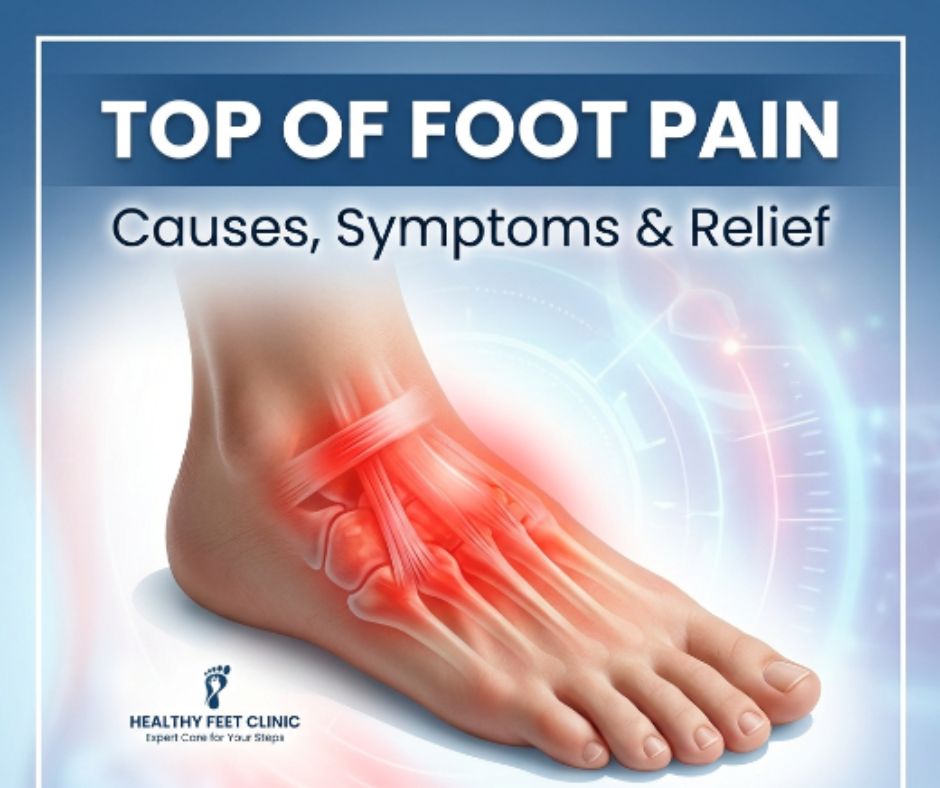
Top of Foot Pain can make everyday activities like walking, running, or standing feel uncomfortable and frustrating. The pain may begin suddenly after an injury or develop gradually because of overuse, poor footwear, or an underlying medical condition. Since the top of the foot contains Extensor tendons, Metatarsal bones, and several small Foot joints, even minor irritation can affect your mobility.
Some people experience a Sharp pain, while others notice a constant dull ache, swelling, or stiffness. Understanding the cause of Top of Foot Pain is the key to choosing the right treatment, preventing complications, and returning to your daily routine with confidence and lasting comfort.
What Is Top of Foot Pain?
Top of foot pain, also known as Dorsal foot pain, refers to discomfort that develops across the upper surface of the foot. This area contains the Extensor tendons, Toe extensors, Metatarsal bones, Foot joints, and important Tendons and ligaments that work together every time you stand, walk, run, or climb stairs. Because these structures are close together, even a small injury or strain can affect your movement. Some people notice a mild Dull ache, while others experience Sharp pain that makes daily activities difficult. If you often wonder why does my foot hurt on top, understanding the anatomy of the foot is the first step toward finding the real cause.
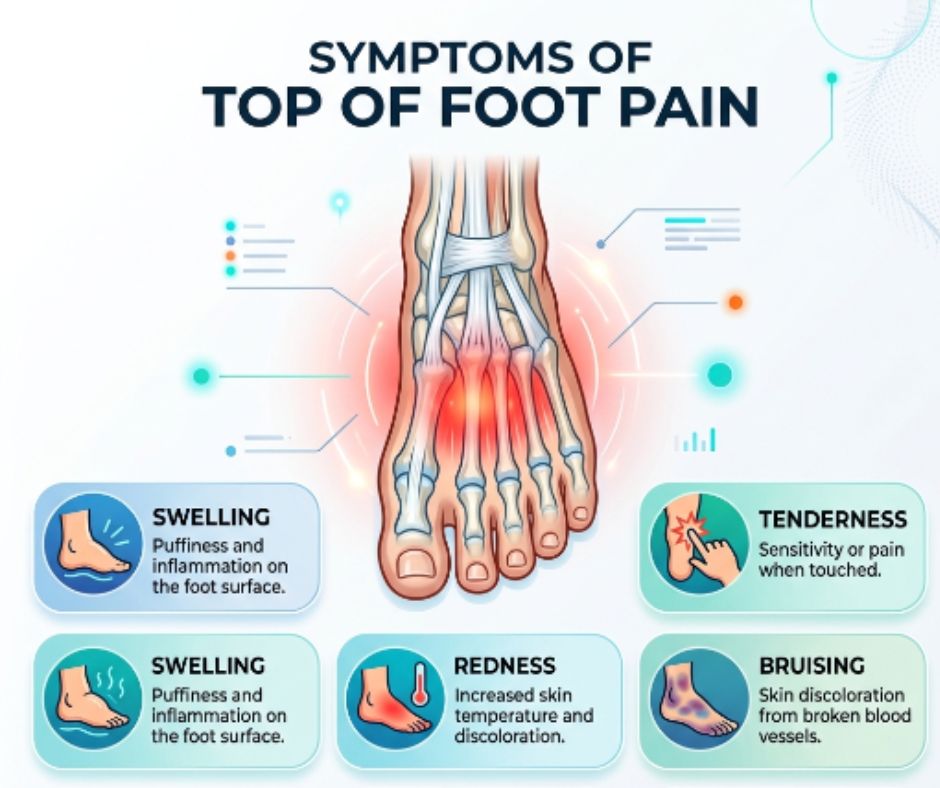
The symptoms of Top of foot pain vary depending on the underlying condition. You may notice Swelling, Foot tenderness, Foot stiffness, Burning sensation, Tingling, or pain that becomes worse when you Bear weight. Some conditions develop slowly over weeks because of repeated stress, while others appear suddenly after an injury. Ignoring early signs may lead to more serious damage and a longer Recovery period. Learning what each symptom means helps you recognize whether the pain comes from inflamed tendons, irritated nerves, injured bones, or another medical problem.
| Common Symptom | Possible Cause |
| Sharp pain | Metatarsal stress fracture, tendon injury |
| Dull ache | Overuse injury, Arthritis |
| Swelling | Foot inflammation, tendon damage |
| Burning sensation | Pinched nerve, Nerve compression |
| Tingling | Irritated nerves |
| Redness and warmth | Gout or Infection |
What Causes Pain on Top of the Foot? (Common Culprits Explained)
Many people search online asking what causes pain on top of the foot because several conditions can produce similar symptoms. The most common Foot pain causes include Extensor tendonitis, Metatarsal stress fracture, Overuse injury, Arthritis, Gout, Ganglion cyst, and Nerve compression. Long hours of standing, running on hard surfaces, sudden increases in exercise, and wearing tight shoes can all place extra pressure on the upper foot. Over time, this repeated stress irritates muscles, bones, and connective tissues, leading to persistent discomfort. Identifying the exact cause is essential because every condition requires a different treatment approach.
Each condition creates its own pattern of pain. Extensor tendonitis usually causes soreness that worsens during movement, while a Metatarsal stress fracture often produces deep, pinpoint pain that becomes more severe when you walk. Gout may trigger sudden attacks with intense pain, Redness and warmth, and noticeable Swelling around the affected joint. A Pinched nerve or Nerve compression commonly causes Burning sensation, Tingling, or Numbness across the top of the foot. Understanding these differences helps doctors make an accurate diagnosis and allows treatment to begin before complications develop.
Is Your Footwear Causing the Pain? Simple Fixes That Actually Work
Many people never realize their shoes are the real reason behind Top of foot pain. Tight-fitting shoes, narrow toe boxes, stiff materials, or overly tight Shoe lacing can place constant pressure on the top of the foot. This pressure irritates the Extensor tendons, reduces normal movement, and increases Foot inflammation during walking or exercise. If you notice Pain on top of foot when walking that improves after removing your shoes, your footwear may be contributing to the problem. Even expensive shoes can cause discomfort if they do not match your foot shape or activity level.
Making small changes often provides noticeable relief without complicated treatment. Choosing Supportive footwear with proper cushioning helps spread pressure evenly across the foot and protects the Foot joints from repeated impact. Many people also benefit from Orthopedic shoes or supportive insoles that improve alignment and reduce strain on the Tendons and ligaments. Loosening the Shoe lacing over the painful area can reduce pressure immediately, while replacing worn-out athletic shoes every few hundred miles helps prevent future injuries. If you are searching for the Best shoes for top of foot pain or wondering Can tight shoes cause foot pain, the answer is yes, and selecting the right footwear is often one of the simplest ways to support long-term Recovery.
| Footwear Problem | Possible Effect | Helpful Solution |
| Tight Shoe lacing | Pressure on tendons | Loosen or adjust laces |
| Narrow shoes | Foot tenderness and nerve irritation | Choose a wider toe box |
| Worn-out shoes | Increased impact on the foot | Replace shoes regularly |
| Poor arch support | Muscle fatigue and Foot inflammation | Wear Supportive footwear |
| Hard soles | Extra stress on the foot | Select cushioned shoes |
Extensor Tendonitis: Recognizing the “Frayed Rope” Sensation
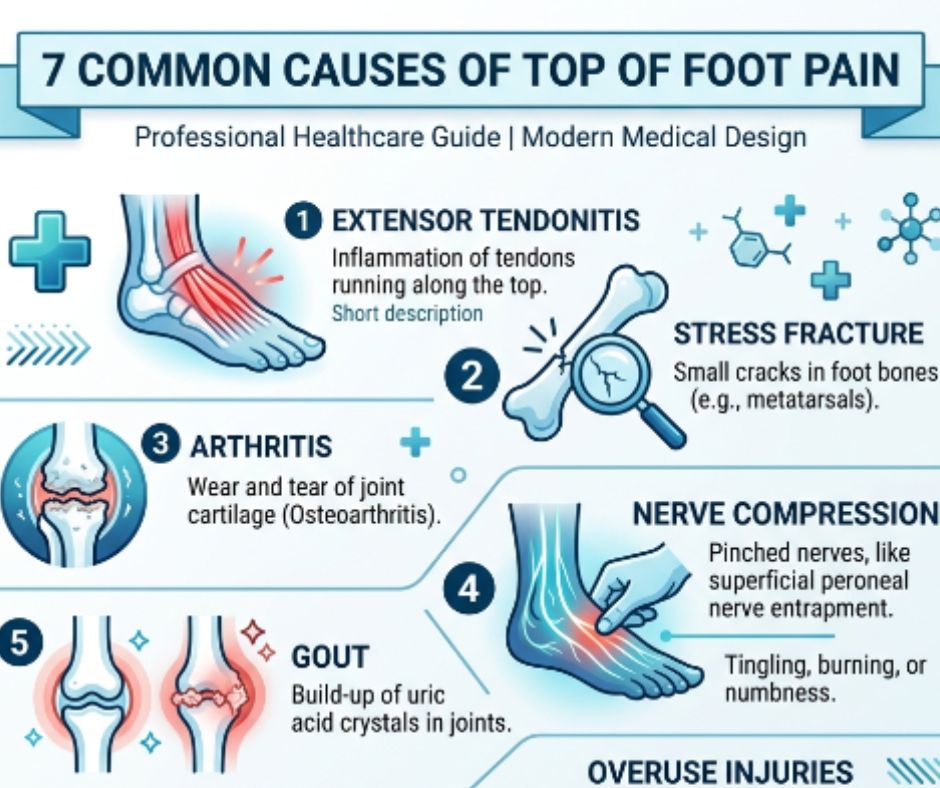
Extensor tendonitis is one of the leading Foot pain causes affecting runners, walkers, hikers, and people who spend long hours on their feet. The condition develops when the Extensor tendons that lift the Toe extensors become irritated from repetitive movement or excessive pressure. Many people describe the discomfort as feeling like a tight or frayed rope stretching across the top of the foot. The pain usually begins gradually and becomes more noticeable during activity, making Top of foot pain when walking or climbing stairs increasingly uncomfortable. Mild Swelling, Foot tenderness, and Foot stiffness often accompany the pain, especially in the morning or after exercise.
If you are asking How do I know if I have Extensor tendonitis, a proper Medical evaluation is the best way to confirm the diagnosis. During a Foot examination, a Podiatrist, Orthopedic specialist, or Foot and ankle doctor checks for tenderness, movement limitations, and pain when lifting the toes. An X-ray may be ordered to rule out a fracture, while an MRI scan can clearly show inflamed tendons if symptoms persist. Treatment usually begins with the RICE method, including rest, Ice therapy, Cold therapy, and Anti-inflammatory medication when appropriate. Gentle Foot stretches, strengthening exercises, and Physical therapy help restore flexibility, reduce pain, and improve Recovery, allowing most people to return safely to their normal activities within several weeks.
Stress Fractures: How to Identify Deep, Pinpoint Pain
A Metatarsal stress fracture is a tiny crack that develops in one of the Metatarsal bones after repeated impact instead of a single accident. This injury is common among runners, hikers, dancers, military recruits, and people who suddenly increase their physical activity. Unlike muscle soreness, the pain usually starts as a mild discomfort and gradually becomes more intense. Many people notice Top of foot pain that worsens during activity and improves with rest. As the fracture progresses, the pain becomes localized, making it easy to point to one painful spot with a finger. If you are wondering What does a stress fracture in the foot feel like or How to spot a stress fracture, deep, pinpoint pain that becomes worse when you Bear weight is one of the strongest warning signs.
A prompt Medical evaluation helps prevent the injury from becoming more severe. During a Foot examination, your healthcare provider checks for swelling, tenderness, and pain over the injured bone. An X-ray may not always detect a small fracture during the early stages, so an MRI scan is often recommended when symptoms continue despite normal X-ray results. Treatment usually involves resting the foot, avoiding high-impact activities, wearing supportive footwear, and allowing enough time for complete Recovery. Ignoring a Metatarsal stress fracture may lead to a larger break, delayed healing, or long-term complications that affect your ability to walk comfortably.
| Symptom | Metatarsal stress fracture | Extensor tendonitis |
| Pain location | One small area | Along the tendon |
| Pain type | Deep Sharp pain | Aching or pulling pain |
| Activity | Worse when walking | Worse with toe movement |
| Swelling | Mild to moderate | Mild |
| Diagnosis | X-ray, MRI scan | Physical exam, MRI if needed |
Gout, Nerve Compression, or Something Else? Less Common Causes
Although tendon injuries and fractures are common, several less frequent conditions can also cause Top of foot pain. Gout develops when uric acid crystals collect inside the Foot joints, creating sudden attacks of severe pain. The affected area often becomes extremely tender with noticeable Swelling, Redness and warmth, making even light pressure from a bedsheet uncomfortable. Another possible cause is a Ganglion cyst, which is a fluid-filled lump that may press against nearby tissues and create discomfort on the top of the foot. In rare situations, serious conditions such as an Infection may develop, especially after an Open wound, causing pain along with Fever, redness, and increasing swelling that requires immediate medical attention.
Nerve-related conditions create a different pattern of symptoms than bone or tendon injuries. A Pinched nerve or Nerve compression may produce a Burning sensation, persistent Tingling, or Numbness that spreads into the toes instead of remaining in one location. These symptoms may become worse after standing for long periods or wearing tight shoes. If you are asking What nerve causes pain on top of the foot or What are the signs of gout in the foot, the answer depends on the exact condition and requires a careful Medical evaluation. A Podiatrist, Orthopedic specialist, or Foot and ankle doctor can determine the underlying cause through a detailed Foot examination and imaging tests when necessary, ensuring you receive the most appropriate treatment and a smoother Recovery.
Top of Foot Pain vs. Other Foot Conditions: How to Tell the Difference
Many foot conditions share similar symptoms, making it difficult to identify the exact cause without a careful examination. Top of foot pain often develops over the Extensor tendons, Metatarsal bones, or Foot joints, while other disorders affect different parts of the foot. If you experience Pain on top of foot when walking, compare where the pain begins, how it feels, and what activities make it worse. For example, Stress fracture vs tendonitis is a common comparison because both conditions can cause discomfort during movement, yet a fracture usually creates deep pinpoint pain while tendon irritation produces pain that follows the tendon.
Understanding these differences can help you seek the right treatment sooner. Tendonitis vs fracture symptoms are not always obvious, and conditions such as Gout vs nerve pain foot may appear similar during the early stages. A proper Medical evaluation, including a detailed Foot examination, may involve an X-ray or MRI scan to confirm the diagnosis. Early treatment reduces complications, shortens Recovery, and helps you return to normal activities more quickly.
| Condition | Pain Location | Common Symptoms | Typical Cause |
| Top of foot pain | Upper foot | Swelling, Foot tenderness | Tendon or bone injury |
| Extensor tendonitis | Along the tendons | Pain with toe movement | Overuse injury |
| Metatarsal stress fracture | One small area | Deep Sharp pain | Repetitive impact |
| Gout | Usually one joint | Redness and warmth, severe pain | Uric acid buildup |
| Pinched nerve | Top of foot and toes | Burning sensation, Tingling, Numbness | Nerve compression |
At-Home Remedies: Effective First Aid Steps for Quick Relief
Most mild cases of Top of foot pain improve with simple home care when treated early. If you are searching for How to relieve top of foot pain or Foot pain treatment at home, the first step is reducing stress on the injured area. The RICE method remains one of the most effective early treatments because it combines rest, Ice therapy, compression, and elevation to reduce Foot inflammation and discomfort. Applying Cold therapy for about 15 to 20 minutes several times each day helps control Swelling and eases pain during the first 48 hours. If needed, a doctor may recommend an Anti-inflammatory medicine to reduce inflammation and improve comfort.
Gentle movement becomes important once the pain starts improving. Many people benefit from Foot stretches, especially if they are wondering How to stretch top of foot or looking for the Safest stretches for top of foot pain. Light stretching, strengthening exercises, and gradual activity help restore flexibility without placing excessive stress on healing tissues. Wearing Supportive footwear or Orthopedic shoes during recovery also reduces pressure on the foot and lowers the risk of future injuries. If symptoms continue for more than a few days or become worse, consult a Podiatrist, Orthopedic specialist, or Foot and ankle doctor for further evaluation and guidance.
| Home Treatment | Purpose | Expected Benefit |
| RICE method | Reduce pain and swelling | Faster healing |
| Ice therapy | Lower Foot inflammation | Pain relief |
| Cold therapy | Control swelling | Improved comfort |
| Foot stretches | Improve flexibility | Better movement |
| Supportive footwear | Reduce pressure | Prevent repeated injury |
| Orthopedic shoes | Improve foot support | Long-term Recovery |
Prevention Tips: How to Avoid Top of Foot Pain in the Future
Preventing Top of foot pain is much easier than treating a long-term injury. Healthy daily habits protect the Extensor tendons, Metatarsal bones, Foot joints, and surrounding Tendons and ligaments from unnecessary strain. If you regularly run, walk, or play sports, increase your activity slowly instead of making sudden changes. Gradual progress gives your muscles, bones, and tendons enough time to adapt and reduces the risk of an Overuse injury. Wearing Supportive footwear with proper cushioning and using correct Shoe lacing techniques also help distribute pressure evenly across the foot and lower the chance of developing Pain on top of foot when walking.
Regular stretching and strengthening exercises keep your feet flexible and stable. If you are searching for the Best shoes for top of foot pain or How to relieve dorsal foot pain, remember that prevention starts before pain appears. Gentle Foot stretches, maintaining a healthy body weight, replacing worn-out shoes, and taking rest days after intense workouts all support long-term foot health. Paying attention to small warning signs, such as mild Foot tenderness or Foot stiffness, allows you to make adjustments before a serious injury develops. These simple habits encourage faster Recovery after exercise and help keep your feet comfortable for years.
| Prevention Habit | Benefit |
| Wear Supportive footwear | Reduces pressure on the foot |
| Adjust Shoe lacing | Prevents tendon irritation |
| Perform Foot stretches | Improves flexibility |
| Increase activity gradually | Prevents Overuse injury |
| Replace worn-out shoes | Improves shock absorption |
| Rest after heavy activity | Supports tissue Recovery |
When to See a Doctor: Warning Signs You Shouldn’t Ignore
Although many cases of Top of foot pain improve with home care, some symptoms require immediate medical attention. If you experience severe pain that prevents you from putting weight on your foot, noticeable Deformity, an Open wound, or increasing Swelling, do not delay seeking professional care. Pain accompanied by Redness and warmth, Fever, or signs of an Infection should also be treated as an urgent medical problem. If you are asking When should I worry about foot pain or When to see a doctor for foot pain, persistent symptoms lasting more than one week or worsening despite rest should always be evaluated by a healthcare professional.
A Podiatrist, Orthopedic specialist, or Foot and ankle doctor will perform a detailed Medical evaluation and Foot examination to identify the exact cause of your symptoms. Depending on the findings, an X-ray may detect broken bones or arthritis, while an MRI scan provides a detailed view of soft tissues, including the Extensor tendons and surrounding ligaments. Early diagnosis allows treatment to begin before complications develop, leading to a smoother Recovery and reducing the risk of long-term mobility problems. Receiving the right care at the right time is one of the best ways to protect your foot health and return safely to your normal activities.
Frequently Asked Questions
What is wrong when the top of your foot hurts?
Pain on the top of your foot can result from extensor tendonitis, a stress fracture, arthritis, nerve compression, poor-fitting shoes, or overuse. A proper diagnosis helps identify the exact cause.
What are 5 symptoms foot doctors say you should never ignore?
Severe swelling, inability to bear weight, numbness, redness with fever, and an open wound or foot deformity should be evaluated by a doctor as soon as possible.
What does tendonitis on top of the foot feel like?
Tendonitis usually feels like a sore, aching, or burning pain across the top of the foot that worsens with walking, running, or lifting your toes.
How do I relieve pain on the top of my foot?
Rest your foot, apply ice, wear supportive shoes, elevate the foot, and avoid activities that increase pain. See a healthcare provider if symptoms persist.
Why won’t the top of my foot stop hurting?
Persistent pain may indicate a stress fracture, tendon injury, arthritis, nerve compression, or another underlying condition that requires medical evaluation and treatment.
