
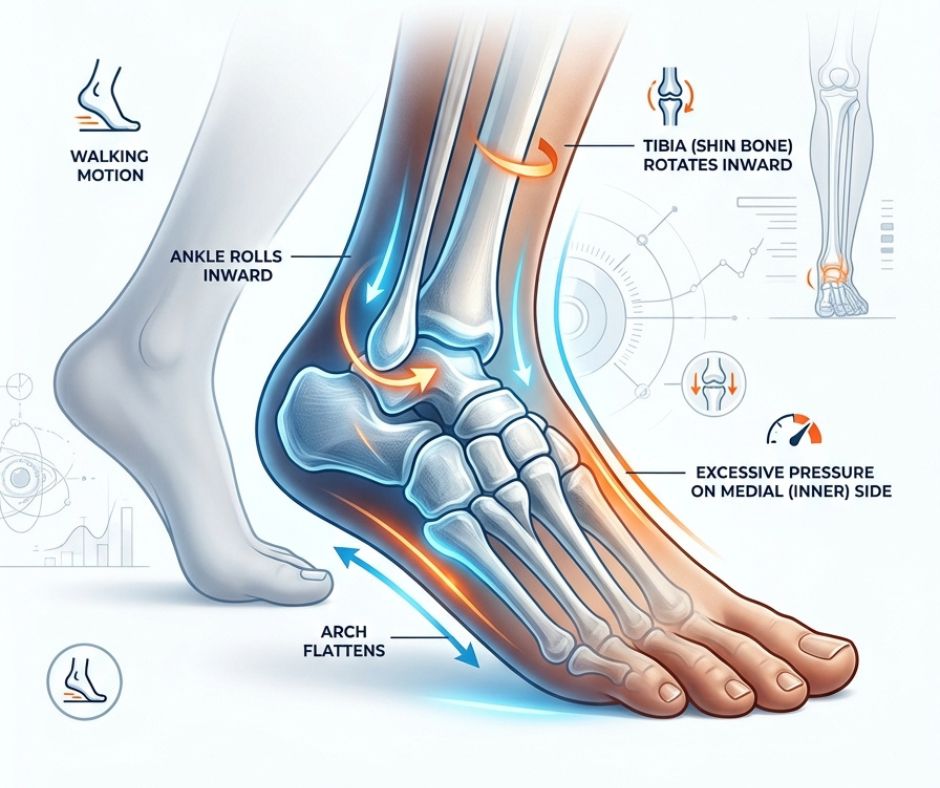
Your feet do more work than most people realize, absorbing thousands of small impacts every single day through walking, running, and standing. When the arch collapses too far inward with each step, this condition is known as overpronation, and it affects millions of people across the United States. Many cases start with flexible flat feet, where the arch simply cannot hold its natural shape under pressure.
Left unaddressed, poor foot alignment slowly changes how the entire body moves, often leading to pain far beyond the feet themselves. Understanding the early signs matters, since proper foot biomechanics and timely visits to a trusted podiatrist can prevent years of discomfort down the road.
What is Overpronation of the Feet?
Every foot rolls inward a little when it hits the ground. This motion is called foot pronation, and it helps absorb shock. Overpronation happens when this roll goes too far. The arch flattens more than it should. This is different from underpronation / supination, where the foot barely rolls inward at all. Overpronation vs normal pronation comes down to how much the arch gives way under pressure.
Doctors often link this issue to flat feet / flexible flat feet. The arch collapses under body weight during walking or running. Over time, this leads to poor foot alignment throughout the leg. Many people never notice the problem until pain shows up somewhere else in the body.
Causes of Overpronation
Many factors can push a foot toward this pattern. Body weight plays a large role, since extra pounds add stress to the arch. Pregnancy also loosens ligaments, which can lead to fallen arches. Genetics matter too. Some people are simply born with soft, flexible tissue in their feet.
What causes overpronation in everyday life often comes down to poor footwear choices. Worn-out shoes lose their support fast. Weak ankles and tight calf muscles also add strain. The table below shows common causes at a glance.
| Cause | How It Affects the Foot |
| Excess body weight | Adds pressure on the arch |
| Pregnancy | Loosens ligaments and joints |
| Genetics | Creates naturally flexible arches |
| Worn footwear | Removes needed arch support |
| Weak ankle muscles | Fails to control foot motion |
Common Signs and Symptoms of Overpronation
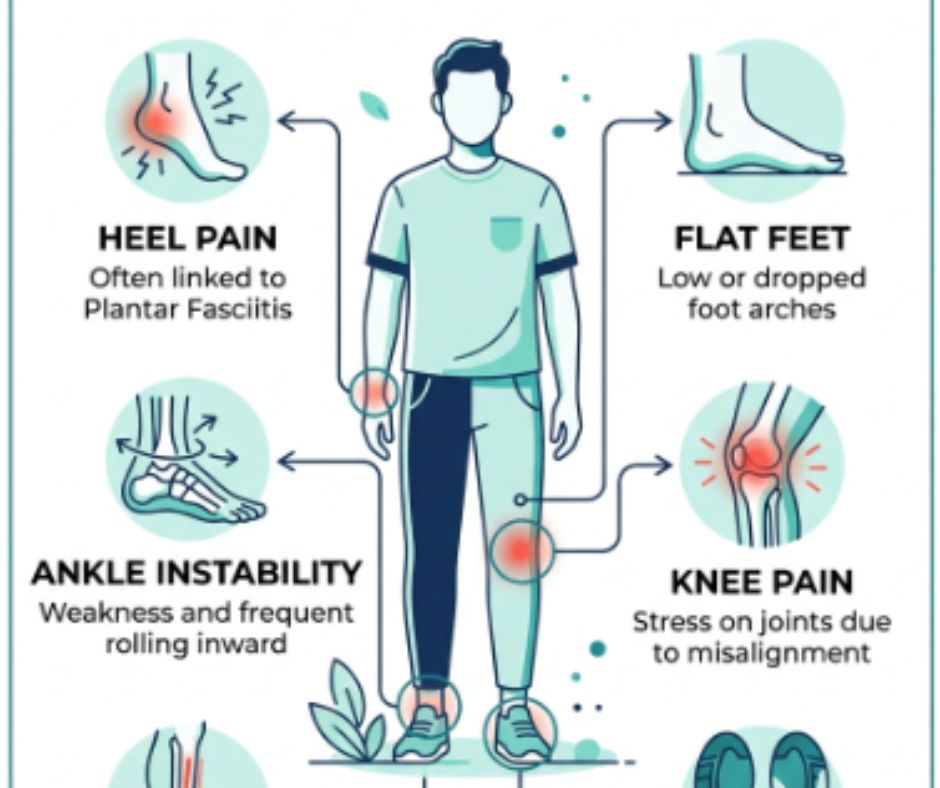
Pain rarely stays in one place. It often spreads through the whole body. Signs of overpronation while walking include uneven shoe wear and tired arches. Some people feel sharp pain near the heel. Others notice stiffness after standing for a long time.
How do I know if I overpronate? Watch for these common conditions linked to the issue. Plantar fasciitis causes stabbing heel pain in the morning. Heel spurs form from repeated stress on the bone. Metatarsalgia brings pain to the ball of the foot. Tendonitis, bunions, Achilles pain, and shin splints are also common results of long-term overpronation.
How Overpronation Affects Your Body (Biomechanics Explained)
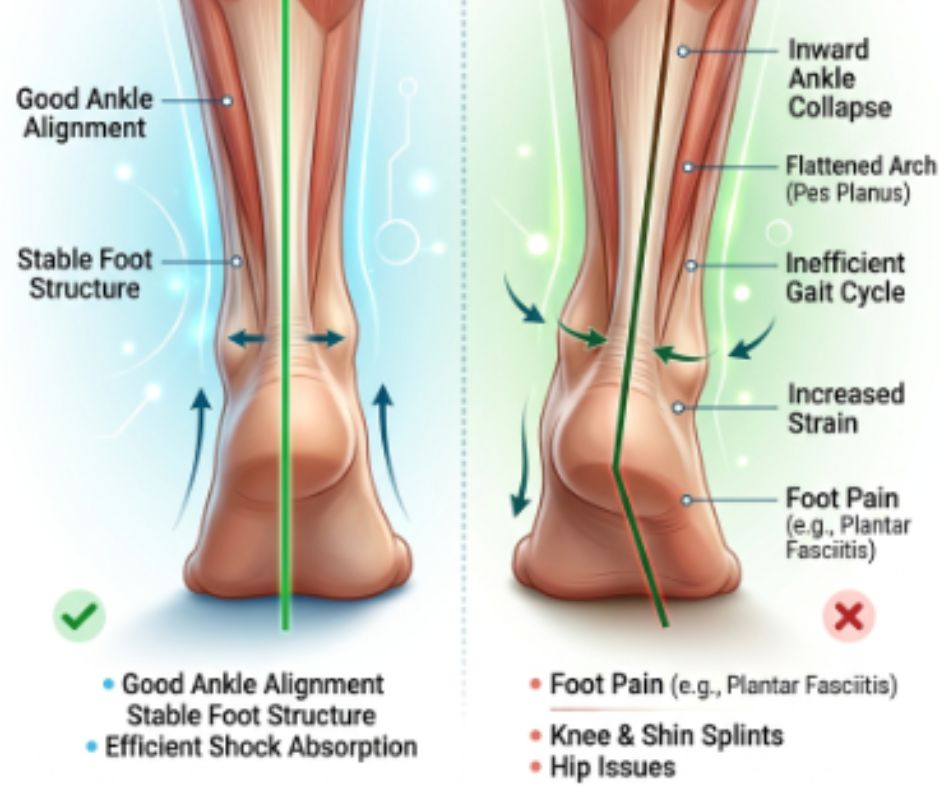
The foot does not work alone. It connects to a long chain of joints and muscles. This field of study is called foot biomechanics. When the ankle rolls too far inward, the knee often twists slightly to compensate. Over months and years, this small shift adds real strain higher up the body.
Does overpronation cause knee pain? Yes, it often does. Ankle rolling inward changes how force travels up the leg. This can lead to hip pain and lower back tension too. Athletes who ignore this pattern often face repeated running injuries during training season.
Who is at Risk of Overpronation?
Not everyone faces equal risk. Runners face constant impact with every stride, which makes their feet work harder. People with flat arches from birth also face higher odds. Pregnant women and older adults fall into this group as well, since ligaments naturally loosen with age or hormone changes.
Athletes are not the only ones affected, though. Office workers who stand for long shifts often develop the same issue. People carrying extra body weight face added pressure too. The chart below shows how common risk groups compare.
| Risk Group | Main Reason |
| Runners | Repeated foot impact |
| Pregnant women | Loosened ligaments |
| Overweight individuals | Extra pressure on arches |
| Older adults | Weakened connective tissue |
| People with flat feet | Naturally low arch support |
How is Overpronation Diagnosed?
A proper diagnosis starts with a trained expert. A podiatrist studies the foot, ankle, and lower leg in detail. This branch of medicine, known as podiatry, focuses on movement and structure. Many specialists hold a DPM (Doctor of Podiatric Medicine) degree, which means years of focused training in foot care.
How to test for overpronation usually involves a simple walking or running exam. This process, called gait analysis, tracks how the foot strikes the ground. When to see a podiatrist for overpronation is simple advice: book a visit once pain lasts more than a few days. A foot and ankle specialist can spot problems long before they become serious.
What Happens During a Gait Analysis?
A typical exam only takes a few minutes. The patient walks or jogs while a specialist watches foot motion closely. Some clinics use cameras or pressure sensors for added detail. The results guide every treatment decision that follows.
Treatment Options for Overpronation
Good news awaits most patients. Overpronation responds well to the right care plan. Orthotics are one of the most common tools used today. These devices slide into shoes and support the arch from below. Shoe insoles offer a lighter option for milder cases.
Custom orthotics are built from a mold of the patient’s own foot. Can overpronation be corrected without surgery? In most cases, yes. Best orthotics for flat feet usually combine firm arch support with a deep heel cup. Supportive footwear paired with orthotics often solves the problem within a few months.
“Most patients see real improvement once they commit to proper support and consistent care,” says one foot care expert who treats overpronation daily.
Best Exercises and Prevention Tips for Overpronation
Prevention works better than any cure. How to fix overpronation naturally often starts with simple daily habits. Strengthening the ankle and arch muscles builds long-term stability. Calf stretches loosen tight tissue that pulls the foot out of position.
Overpronation exercises at home do not require fancy equipment. Toe curls, heel raises, and short foot exercises all help build strength. Preventive foot care also means choosing shoes with firm heel support. Best shoes for overpronation feature strong arch cushioning and a stable base. The table below lists a few simple exercises to start with.
| Exercise | Purpose |
| Calf raises | Builds ankle strength |
| Toe curls | Improves foot muscle control |
| Short foot exercise | Supports the arch directly |
| Resistance band stretches | Improves ankle flexibility |
Why Choose Dr. David Jenson for Overpronation Treatment?
Choosing the right doctor makes a real difference. Dr. David Jenson brings years of hands-on experience treating overpronation and related foot conditions. His approach blends detailed gait analysis with personalized treatment plans built around each patient’s needs.
One patient case involved a runner struggling with constant knee pain. After a full biomechanical exam, custom orthotics and targeted exercises solved the issue within weeks. This kind of focused, patient-first care sets proper treatment apart from generic advice found online. Scheduling a visit is often the fastest path toward lasting relief.
Frequently Asked Questions
What is the root cause of overpronation?
The root cause is usually a collapsed or overly flexible arch, often linked to flat feet, weak ankle muscles, or genetics.
How do you fix severe overpronation?
Severe cases typically need custom orthotics, supportive footwear, and targeted physical therapy under a podiatrist’s guidance.
Where does your foot hurt if you overpronate?
Pain usually shows up in the arch, heel, and inner ankle, though it can also spread to the knees, hips, or lower back.
How can I tell if I overpronate?
Check your shoe soles for excess wear on the inner edge, or watch how your ankle rolls inward while walking or running.
How can I fix my overpronation naturally?
Strengthening exercises like calf raises and toe curls, paired with proper supportive shoes, can naturally improve mild overpronation.
Final Thoughts
Overpronation is common, but it does not have to control daily life. Understanding the causes and symptoms is the first step toward real relief. With proper diagnosis, the right footwear, and consistent care, most people return to pain-free movement. A quick visit to a trusted foot and ankle specialist can make all the difference.
