
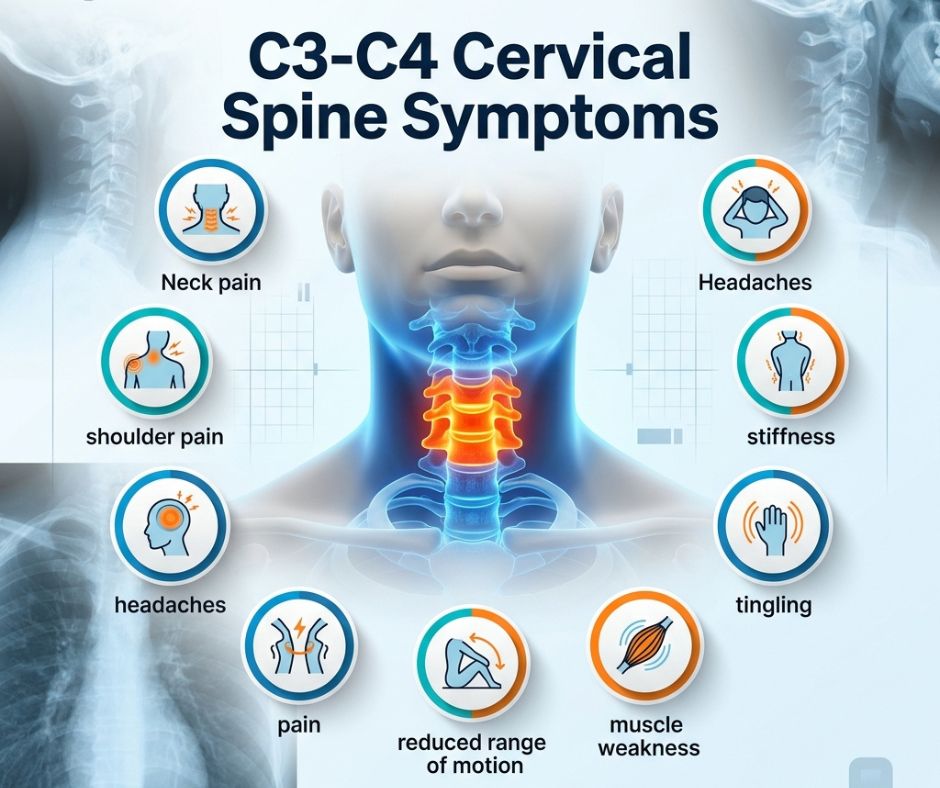
C3-C4 cervical spine symptoms can vary from mild discomfort to noticeable neck and upper-body problems, depending on the underlying condition. The C3-C4 spinal levels play an important role in supporting neck movement, posture, and nerve function. Issues in this area may cause neck pain, stiffness, headaches, or discomfort that spreads toward the shoulders. In some cases, nerve irritation can lead to weakness, numbness, or tingling.
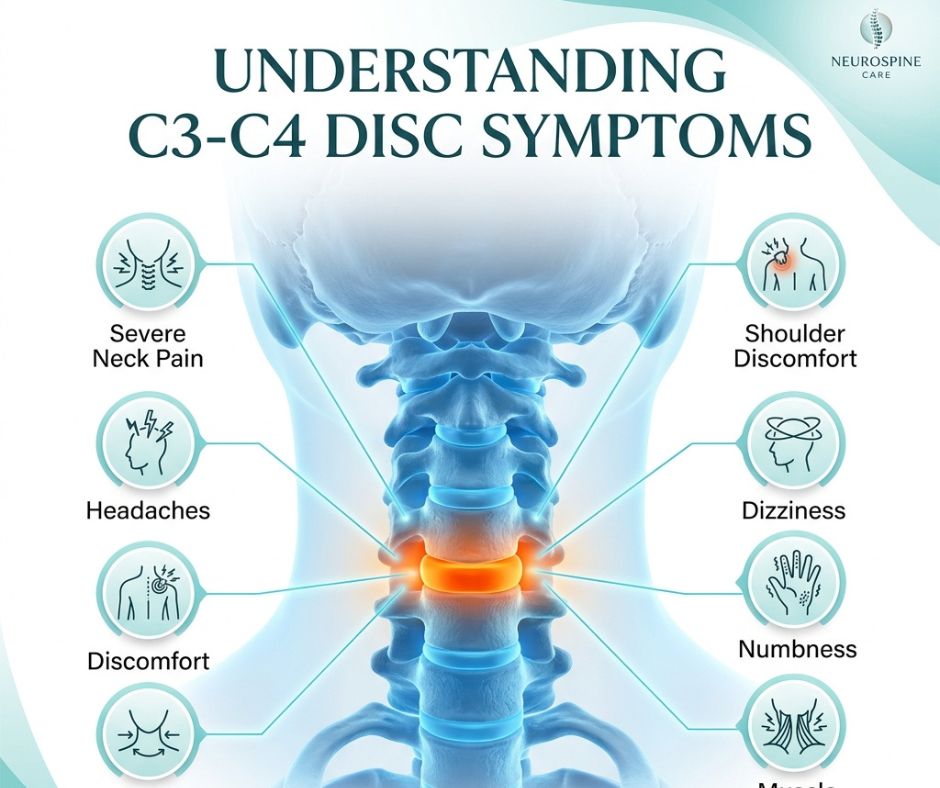
Understanding the possible C3-C4 disc symptoms, common causes, and warning signs can help you recognize when professional medical evaluation may be necessary. Early attention to persistent symptoms may also help prevent complications and support better cervical spine health.
What is the C3-C4 Cervical Spine?
Your cervical spine has seven small bones stacked on top of each other. Doctors call these bones cervical spine vertebrae. The third and fourth bones in this stack are named cervical vertebrae C3 and cervical vertebrae C4. They sit in the upper-middle part of your neck, just below the base of your skull.
Between these two bones sits a soft cushion called the intervertebral disc. This disc lets your neck bend and twist without the bones grinding together. Right next to this disc, small openings called the foramen nerve exit let spinal nerve roots leave the cervical spinal cord and travel out to your neck, shoulders, and even your face. When something presses on these nerve roots, your body sends out a signal. That signal is pain.
Common Causes of C3-C4 Nerve Compression
Many things can cause a nerve to get pinched at this level. The most common one is simple wear and tear. Over time, discs lose water and shrink. Doctors call this degenerative disc disease. As the disc flattens, it can bulge outward and press on nearby nerves. This is often the first step toward long-term neck trouble.
A herniated cervical disc is another major cause. This happens when the soft inner part of the disc pushes through a crack in its tough outer shell. Other causes include cervical spinal stenosis, which is a narrowing of the space around the spinal cord, and bone spurs, also called osteophytes. These bony growths form when joints wear down from arthritis. A sudden whiplash injury from a car crash or a hard fall can also injure the disc and lead to a pinched nerve in neck tissue almost overnight.
What Does C3-C4 Nerve Compression Feel Like? (Key Symptoms)
So, what does this actually feel like? Most people describe a deep, nagging ache in the back or side of the neck. This is one of the classic nerve compression symptoms tied to this spinal level. The pain often gets worse when you hold your head in one position for too long, like when you stare at a screen all day.
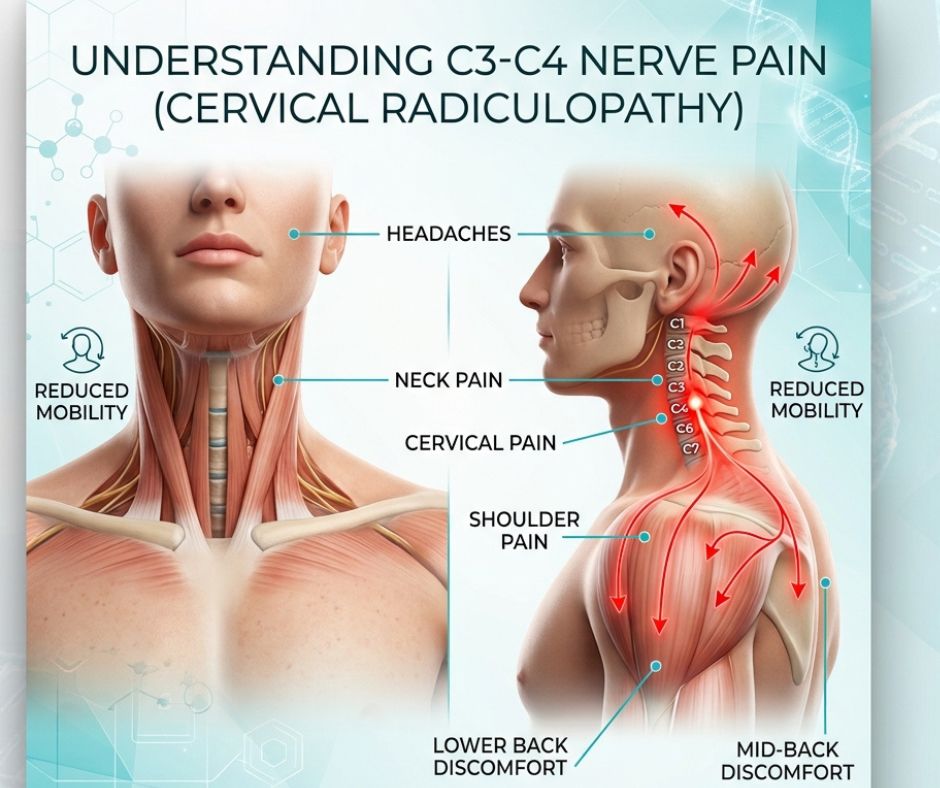
Beyond plain pain, many people notice numbness and tingling in neck tissue, or a strange pins and needles sensation that spreads toward the shoulder. Muscle weakness in neck muscles is common too, along with muscle weakness in shoulder muscles, making it hard to lift your arm or turn your head fully. Some people also feel radiating neck pain that travels toward the back of the skull. This can trigger a cervicogenic headache, a type of headache that starts in the neck rather than the head itself. Others notice referred pain in shoulder areas, even though nothing is actually wrong with the shoulder joint.
“I thought I had a shoulder injury for months,” one patient shared. “It turned out the real problem was a pinched nerve much higher up, near my neck.”
| Symptom | How It Feels |
| Deep neck ache | Dull, constant, worse with poor posture |
| Numbness or tingling | Pins and needles near neck or shoulder |
| Muscle weakness | Trouble lifting arm or turning head |
| Cervicogenic headache | Pain starting at neck, moving to skull base |
| Referred shoulder pain | Ache in shoulder with no direct shoulder injury |
C3-C4 vs Other Cervical Levels: How Symptoms Differ
Not all neck nerve problems feel the same. The exact level of the spine that is affected changes where you feel pain and weakness. This is called cervical radiculopathy, and doctors use the pattern of symptoms to figure out which nerve is involved. A problem at C3-C4 usually stays close to the neck, shoulders, and back of the head.
Lower down the spine, things change quite a bit. C5-C6 nerve compression often sends pain and numbness down into the thumb and index finger. Meanwhile, C6-C7 cervical symptoms tend to affect the middle finger and the back of the arm. Knowing this difference helps a spine specialist consultation move faster, since the symptom pattern often points straight to the damaged level before any scan is even done.
| Spinal Level | Main Symptom Area | Typical Sensation |
| C3-C4 | Neck, shoulder, base of skull | Ache, stiffness, headache |
| C5-C6 | Shoulder to thumb and index finger | Tingling, arm weakness |
| C6-C7 | Middle finger, back of arm | Sharp pain, weak grip |
Warning Signs: When C3-C4 Symptoms Become Serious
Most neck pain gets better with rest and simple care. But sometimes, the signs point to something more serious. If you notice sudden trouble breathing, a loss of balance, or a change in bladder or bowel control, seek help right away. These can be signs of spinal cord compression, which needs urgent medical attention rather than home care.
Other red flags include a fast drop in muscle strength, a fever along with neck pain, or numbness that spreads quickly to both arms. Do not wait these out. A quick visit to an orthopedic spine specialist or emergency room can rule out dangerous causes and start the right treatment sooner rather than later.
How is C3-C4 Nerve Compression Diagnosed?
Diagnosis usually starts simple. A spinal surgeon or spine specialist will check your range of motion, test your physical examination reflexes, and ask about your daily habits and pain patterns. This first step often gives strong clues about which nerve is affected, even before any imaging is done.
From there, imaging fills in the details. An X-ray disc space narrowing finding can hint at wear and tear between the bones. An MRI cervical spine scan is the gold standard, since it shows soft tissue like discs and nerves clearly. A CT scan gives sharper detail of bone. If nerve signals seem off, doctors may order an electromyography test, often paired with a nerve conduction study, to measure how well the nerves are firing.
Treatment Options for C3-C4 Nerve Compression
The good news is that most cases improve without surgery. Physical therapy for neck pain is often the first step, helping to build strength and ease pressure on the joints. Doctors may also suggest NSAIDs and muscle relaxants to calm swelling and reduce muscle tightness. For more stubborn pain, a corticosteroid epidural injection can quiet an inflamed nerve root for weeks or months at a time.
When non-surgical treatment does not bring enough relief, surgery becomes an option. An anterior cervical discectomy with fusion, often called ACDF, removes the damaged disc and joins the bones together. A posterior cervical foraminotomy takes a different path, widening the nerve opening from behind the neck. Newer options like artificial disc replacement, sometimes called Cervical Artificial Disc Replacement, use motion-preserving spine surgery to fix the problem while keeping the neck flexible, unlike a traditional spinal fusion.
Home Remedies & Self-Care for C3-C4 Symptom Relief
While you wait for an appointment, small changes at home can bring real relief. Start with neck posture correction. Sitting up straight and raising your screen to eye level takes pressure off the neck joints. Gentle neck stabilization exercises, like slow chin tucks and light stretching, can also ease stiffness without straining the area further.
Heat and cold therapy both have a place here too. Heat relaxes tight muscles, while cold reduces swelling after activity. Try to avoid sleeping on your stomach, since this twists the neck for hours at a time. Simple habits, done daily, often add up to noticeable comfort within a few weeks.
Recovery Time & Outlook for C3-C4 Nerve Compression
Every case is different, but there are general patterns. Mild nerve root compression often improves within a few weeks of rest, stretching, and physical therapy for neck pain. This is the most common recovery timeline for people who catch the problem early and stick to their care plan.
For cases needing surgery, the disc herniation recovery path takes longer. After ACDF or artificial disc replacement, many patients return to light daily activity within four to six weeks. Full strength and comfortable range of motion can take a few months to return completely, especially after spinal fusion procedures.
Why Choose ADR Spine for C3-C4 Treatment?
Choosing the right team matters just as much as choosing the right treatment. At ADR Spine, care starts with a thorough look at your anatomy, your daily habits, and your goals. This is not a one-size-fits-all approach, since every neck and every nerve problem is a little different.
The team focuses heavily on motion-preserving spine surgery whenever possible, aiming to protect your natural neck movement instead of locking joints in place. With deep experience in Cervical Artificial Disc Replacement and other advanced options, ADR Spine works to get you back to your normal life, not just pain-free but fully mobile too.
Frequently Asked Questions
How long does it take to recover from C3-C4 nerve compression?
Mild cases often improve in a few weeks with rest and therapy. Surgical recovery, especially after ACDF, may take four to six weeks before light activity resumes.
What is the difference between C3-C4 and C5-C6 nerve compression symptoms?
C3-C4 problems usually stay in the neck and shoulder area. C5-C6 nerve compression tends to spread pain and numbness into the thumb and hand instead.
Can a herniated C3-C4 disc heal on its own?
Sometimes, yes. The body can shrink and reabsorb some disc material over time. But lasting or worsening symptoms need a proper checkup.
Is surgery always necessary for C3-C4 nerve pain?
No. Many people improve fully with physical therapy, medication, and injections. Surgery is usually a later step, not a first one.
What kind of exercise is safe with C3-C4 nerve compression?
Gentle stretching and neck stabilization exercises are generally safe. Avoid sudden twisting or high-impact movement until a specialist gives clearance.
