

Preparing for the GMAT Practice Tests is one of the smartest ways to understand your exam readiness before test day. These tests give you a realistic view of your skills by copying the pressure, timing, and structure of the real GMAT Focus Edition. Instead of only studying concepts, you learn how to apply them through realistic exam simulation and identify areas that need improvement.
Whether you are aiming for a higher GMAT score or better time management, quality practice tests help you create a focused strategy. With the right performance analytics, detailed feedback, and proper review process, you can turn mistakes into progress and build confidence for the actual exam.
What Is a GMAT Practice Test and How Does It Work?
A GMAT practice test is a realistic version of the Graduate Management Admission Test designed to copy the experience of the real exam. It usually follows the same structure, timing, and difficulty patterns as the official test. These exams help students understand the pressure of solving questions while managing limited time.
The modern GMAT Focus Edition uses a computer adaptive test (CAT) system. This means the exam changes based on your answers. If you answer correctly, the questions may become harder. If you struggle, the system adjusts the difficulty. Quality GMAT adaptive practice tests use a similar approach through an adaptive algorithm to create a more accurate experience.
There are different types of practice formats:
| Type | Purpose |
| Full-length GMAT practice test | Complete exam experience with timing and stamina training |
| GMAT sectional tests | Practice one area such as Quantitative Reasoning, Verbal Reasoning, or Data Insights |
| Diagnostic test | Finds your current level and highlights weak areas |
A GMAT simulation test is especially useful because it creates a real exam environment. You practice the same mental decisions you will make on test day. You learn when to move forward, when to slow down, and how to protect your time.
Why Are GMAT Practice Tests Important for Your Preparation?
Many students spend months studying concepts but still feel uncertain before the exam. The reason is simple. Knowing information and applying it under pressure are two different skills. GMAT preparation tests bridge that gap by showing how your knowledge performs in realistic conditions.
A practice exam helps you identify weak areas quickly. For example, a student may understand algebra concepts but lose points because of slow calculations. Another student may know grammar rules but struggle with difficult Verbal Reasoning questions. Practice tests reveal these hidden problems.
They also help you improve GMAT score through repeated measurement. Every test creates data. You can review your mistakes, understand patterns, and build a stronger GMAT study plan.
The biggest benefits include:
| Benefit | How It Helps |
| Score analysis | Shows your current ability level |
| Error tracking | Reveals repeated mistakes |
| Progress tracking | Measures improvement over time |
| Timed practice | Builds speed and confidence |
A strong preparation process is not about taking endless tests. It is about learning from every attempt. The goal is to turn mistakes into better decisions.
GMAT Practice Tests vs Other Study Materials: Which Is More Effective?
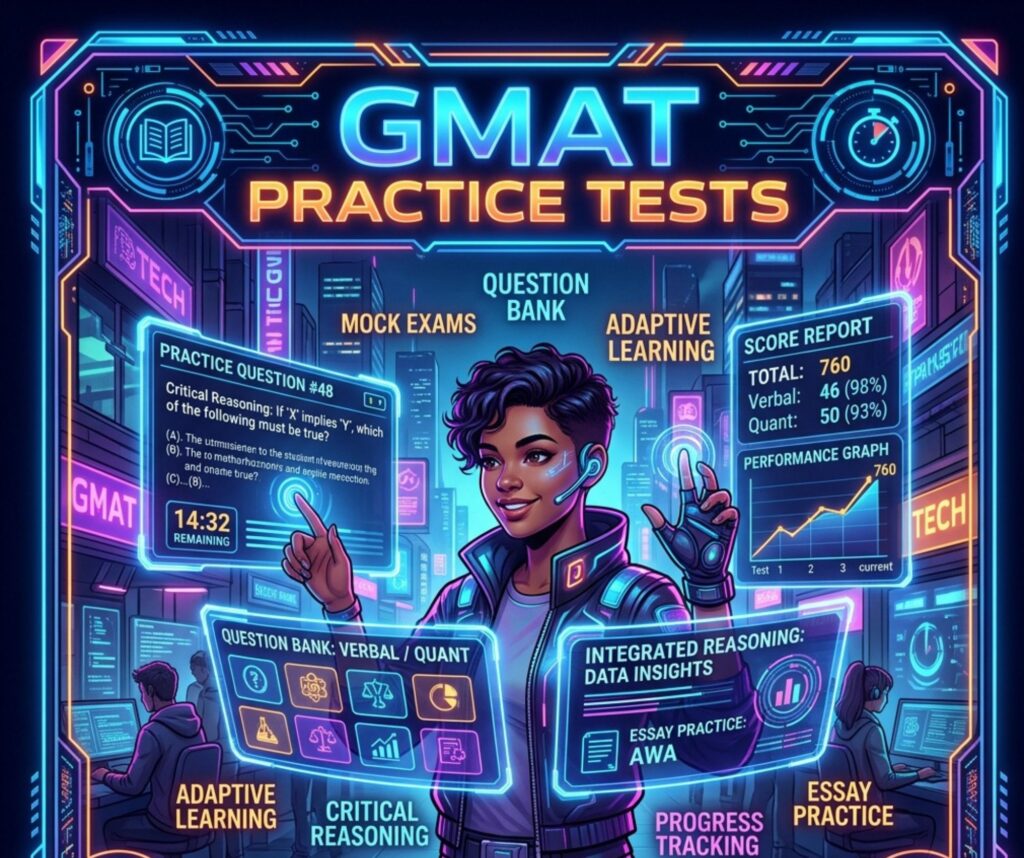
Books, videos, and question banks all have a place in GMAT test preparation. They help you learn formulas, strategies, and concepts. However, they cannot fully recreate the pressure of a real exam.
A textbook can explain a difficult math concept. A question bank can provide hundreds of practice problems. But only a realistic exam can show whether you can apply those skills after one hour of intense concentration.
| Resource | Best Use | Limitation |
| Books | Learning concepts | Limited exam pressure |
| Question banks | Practicing specific skills | Less realistic timing |
| GMAT online practice tests | Full preparation experience | Requires proper review |
For example, a student may solve ten difficult questions at home without a timer. During the real exam, the same student may struggle because of pressure. This is why full-length GMAT practice test sessions are important.
The strongest strategy combines everything. Learn concepts first. Practice individual skills next. Then use GMAT mock tests to measure your actual readiness.
What Features Make a GMAT Practice Test High Quality?
Not every practice exam gives the same value. A high-quality test should feel close to the official GMAT exam. It should challenge you in the same way and provide useful information after completion.
The first important feature is a realistic exam-like interface. Your brain performs better when the environment feels familiar. A good platform copies the layout, navigation, and timing experience.
Another major factor is accurate scoring. A reliable GMAT score predictor helps you understand where your current performance stands. Strong platforms also provide:
| Feature | Why It Matters |
| Detailed explanations | Helps you understand mistakes |
| Performance breakdown | Shows section-level strengths |
| Difficulty level analysis | Explains question challenges |
| Question review | Allows deeper learning |
The best resources also support pacing strategy and test-taking skills. They do not just tell you what went wrong. They explain why it happened and how to fix it.
Where Can You Find the Best GMAT Practice Tests?
Finding the right platform depends on your goals. Some students need accurate scoring. Others need more practice volume. Some need deep feedback to improve specific weaknesses.
Official resources from the Graduate Management Admission Council (GMAC) are considered highly reliable because they are connected to the organization behind the exam. These resources provide realistic questions and a trusted testing experience.
Third-party platforms can also be valuable. Many provide more practice options, advanced analytics, and additional learning features. These GMAT test prep resources can support students who want a structured approach.
Popular choices include:
| Provider | Best For |
| GMAT Club Tests | Adaptive practice and analytics |
| GMAC Official Practice | Official scoring accuracy |
| Experts’ Global | Multiple simulations |
| Target Test Prep | Quant improvement |
| eGMAT SIGmaX | Guided learning support |
Choosing the right option depends on your timeline, budget, and current score level.
Best GMAT Practice Test Providers Compared
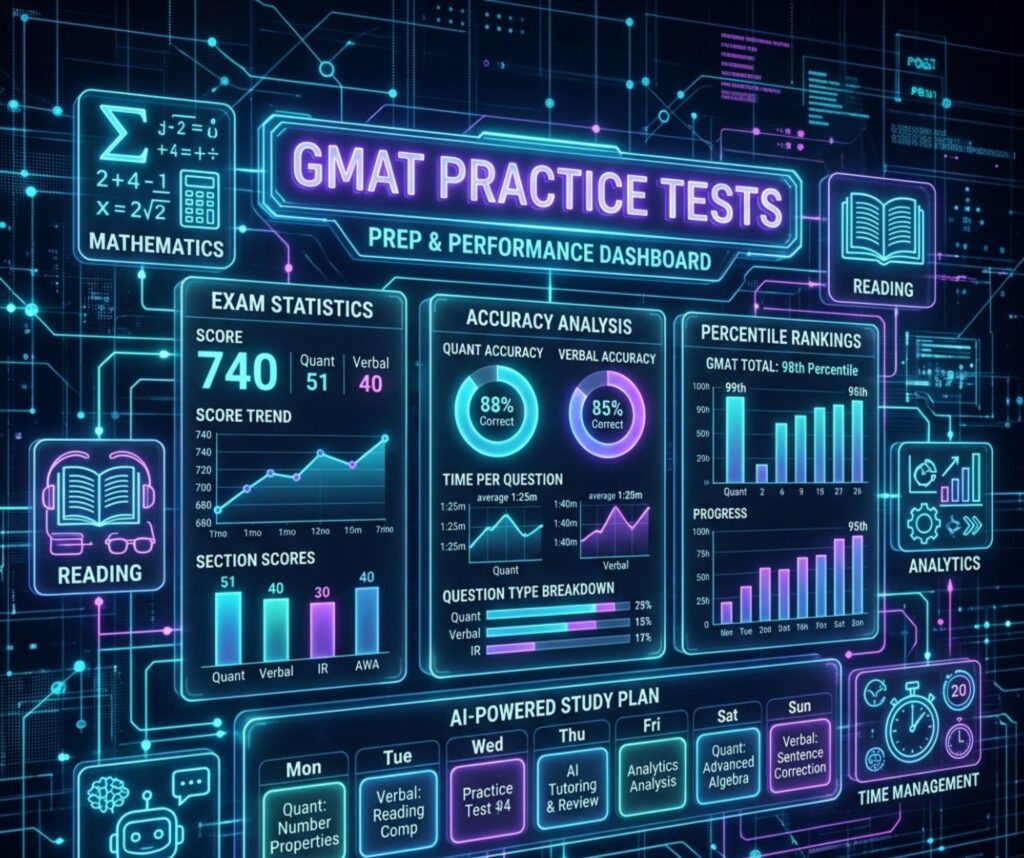
Different platforms solve different preparation problems. The best choice depends on what you need most.
GMAT Club Tests is known for its adaptive GMAT mocks and strong analytics. Students can use sectional practice tests, complete simulations, and review mistakes through detailed feedback. Its GMAT Focus interface creates a familiar experience before test day.
GMAC Official Practice provides an authentic experience because it comes directly from the GMAT exam creators. The platform includes authentic GMAT questions and uses the official scoring system. Many students use it for final preparation because of its score prediction accuracy.
Experts’ Global focuses on practice volume. Students who need repeated testing can benefit from multiple GMAT mocks and full-length simulations. Regular testing builds exam endurance and improves comfort with long sessions.
Target Test Prep follows a different model. It focuses on structured learning rather than only tests. Its GMAT quant preparation approach includes a structured curriculum, personalized study plan, and strong error tracking system.
eGMAT SIGmaX combines testing with learning guidance. It provides adaptive mocks, guided feedback, and useful skill analysis. The platform helps students understand what to study next through detailed study recommendations.
How to Use GMAT Practice Tests Effectively for Maximum Improvement?
Taking tests randomly will not create major progress. A smart approach turns every exam into a learning opportunity.
Start with a baseline exam. This gives you a starting point and helps measure preparation progress. After that, review every mistake carefully. A wrong answer is not just a problem. It is information.
A simple preparation cycle looks like this:
| Stage | Goal |
| First test | Understand current level |
| Skill practice | Fix weak topics |
| Regular mocks | Improve timing and confidence |
| Final tests | Confirm readiness |
Use GMAT sectional tests when you need focused improvement. Use complete exams when you need stamina and realistic practice.
The final weeks before the exam should focus on confidence. Your goal is not only to know answers. Your goal is to handle the complete experience calmly.
Common Mistakes Students Make While Taking GMAT Practice Tests
One common mistake is focusing only on the final score. A score tells you where you are. It does not explain how to improve. The real value comes from reviewing mistakes.
Another mistake is ignoring timing. The GMAT rewards smart decisions. Spending too long on one question can damage your performance later.
Many students also take low-quality tests. Poor resources can create confusion because they do not match the real GMAT scoring system or question style.
A strong approach combines realistic testing, careful review, and continuous improvement.
Free vs Paid GMAT Practice Tests: Which One Should You Choose?
Free GMAT practice tests are useful for beginners. They help you understand the exam structure without spending money. They are a good starting point for building awareness.
Paid options usually provide deeper features. These may include more exams, advanced analytics, better explanations, and stronger progress tracking.
| Option | Best For |
| Free tests | Beginners and first evaluation |
| Paid tests | Serious preparation and detailed improvement |
The right choice depends on your needs. If you need a quick overview, free resources may work. If you want a higher score and structured improvement, premium tools can provide more value.
Final Thoughts: Choosing the Right GMAT Practice Test for Your Goals
The best GMAT practice tests are the ones that match your preparation stage. A beginner may need a diagnostic experience. An advanced student may need accurate scoring and realistic pressure.
The right resource helps you understand your mistakes, improve your strategy, and prepare for the real exam environment. Whether you choose official resources or third-party platforms, consistency matters most.
A strong GMAT learning system is built through practice, review, and adjustment. When your preparation follows a clear direction, every practice exam becomes another step toward a stronger GMAT score and better opportunities in graduate management programs.
