AI has changed the way people create articles, reports, and online information. Today, many readers and businesses want to know whether a piece of writing is original or created by a machine. Learning how to check if content was written by AI helps you understand the difference between AI-generated content and authentic human work.
With the growth of AI content detection technology, you can analyze writing patterns, accuracy, and structure to find possible AI involvement. Whether you are a publisher, student, or business owner, checking content authenticity is important for maintaining trust. The right methods can help you identify AI-written text and protect content originality in the digital world.
What Is AI-Generated Content and Why Does It Matter?
AI-generated content is text created with the help of artificial intelligence systems. These systems use natural language processing, language models, and large language models (LLMs) to predict and generate sentences that sound natural.
Tools powered by GPT models, ChatGPT, Claude AI, and Gemini AI can write articles, summaries, product descriptions, and many other types of content. These systems study huge amounts of information and use machine learning algorithms to understand language patterns.
The main reason people want to identify AI-generated articles is trust. Readers expect accurate information, real experiences, and expert opinions. When content lacks these qualities, it can reduce online content credibility.
For example, a travel article written by an experienced traveler may include personal stories, local tips, and unique details. An AI-written text may describe the destination correctly but often lacks real-world experiences.
The difference can be explained like this:
| Human-written content | AI-written text |
| Includes personal experiences | Often uses general explanations |
| Shows unique opinions | Usually follows common patterns |
| Contains emotional details | May sound neutral |
| Uses real examples | May provide broad information |
AI is not always harmful. Many professionals use AI-assisted writing to improve speed and productivity. The goal is not to remove AI use but to understand whether content provides real value.
How Accurate Are AI Content Detection Methods?
AI detection has improved, but no method can guarantee perfect results. AI content detection depends on many factors, including the AI model used, editing level, and writing style.
Most AI detection tools analyze hidden signals inside text. They study statistical patterns, linguistic patterns, and AI writing patterns that may appear in machine-generated text.
A detector may examine:
| Detection factor | What it analyzes |
| Perplexity score | How predictable the text appears |
| Burstiness score | Variation between sentences |
| Sentence structure analysis | How sentences are formed |
| Vocabulary distribution | Word choices and repetition |
| Writing style analysis | Overall writing behavior |
A lower variation in writing can sometimes suggest AI involvement. However, a human writer can also create simple and predictable content. This is why AI content verification should include more than one method.
Many experts recommend combining automated results with manual review. A detector can highlight possible AI sections, but a human can understand context, expertise, and originality.
Method 1: Use an AI Content Detection Tool (The Fastest Way)
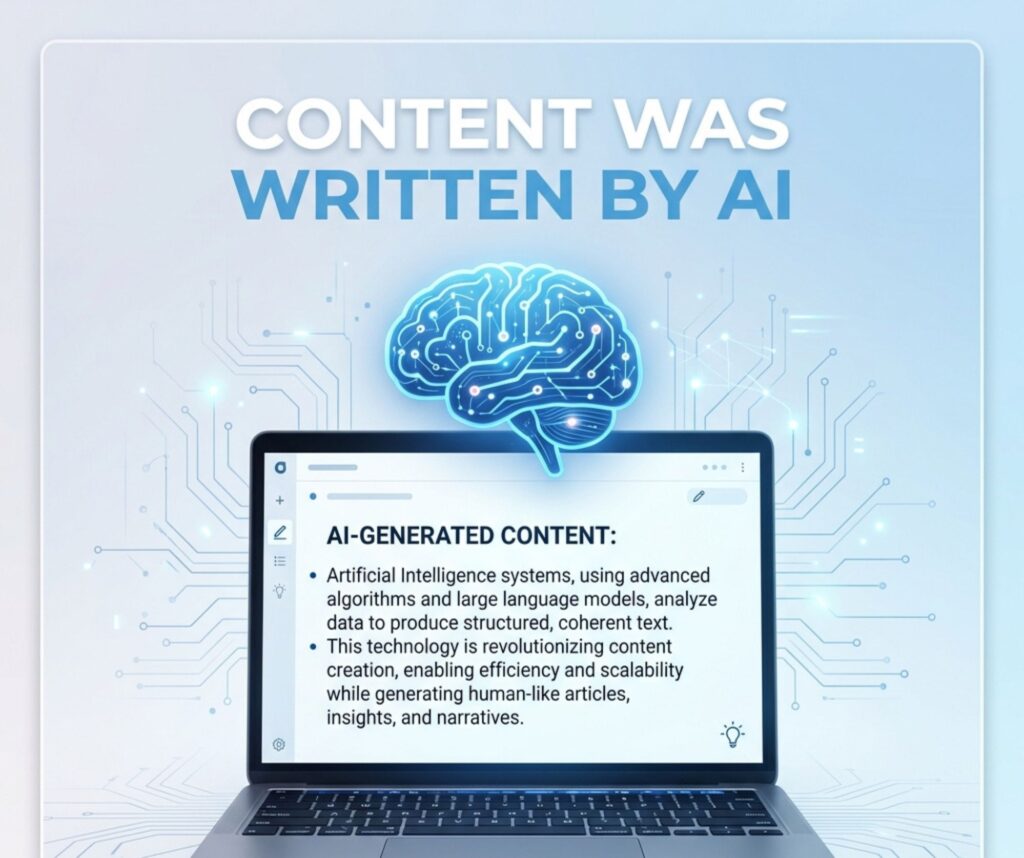
The quickest way to learn how to check if content was written by AI is by using an AI content checker. These platforms are designed to analyze text and estimate whether it was created by a person or a machine.
An AI writing detector looks for signs such as unusual predictability, repeated structures, and common AI-generated language patterns. Many tools use automated text analysis and text classification methods to compare writing behavior.
Popular detection platforms often provide:
| Feature | Purpose |
| AI probability score | Shows the chance of AI involvement |
| Sentence highlighting | Shows suspicious sections |
| Plagiarism checking | Finds copied content |
| Language analysis | Studies writing patterns |
However, results should not be treated as absolute proof. Some human content may receive an AI score because it uses formal language. Likewise, edited AI content may avoid detection.
The strongest approach is using AI detection software as the first step and then reviewing the content manually.
Method 2: Analyze Writing Style and Sentence Patterns
One useful way to detect ChatGPT content is by studying the writing style. AI systems often create sentences with similar rhythm and structure because they follow learned text prediction patterns.
Human writing usually has more natural changes. A person may write a short sentence. Then they may explain an idea with a longer sentence. This creates stronger sentence variation.
AI writing may show:
- Similar sentence lengths
- Repeated formats
- Predictable transitions
- Limited personal expressions
This happens because AI models depend on word probability and token prediction to decide what comes next.
For example:
AI-style sentence:
“Digital marketing is an important strategy that helps businesses improve their online presence and reach more customers.”
Human-style sentence:
“Digital marketing matters because customers now search online before buying. A strong strategy helps businesses become easier to find.”
Both sentences are correct. The difference is the natural flow and personality.
Method 3: Identify AI Writing Signs and Common Patterns
AI-generated writing often has recognizable habits. These habits are not always obvious, but repeated signals can reveal machine involvement.
Common signs include:
- Very general introductions
- Repeated phrases
- Excessive summaries
- Lack of specific examples
- Overly balanced explanations
Many AI tools create polished text but sometimes miss emotional depth. They may explain a topic correctly without showing personal understanding.
This is where AI writing analysis becomes useful. Looking at phrase repetition, grammatical patterns, and AI-generated language patterns can reveal whether the content feels naturally created.
A simple test is asking:
“Does this sound like someone sharing knowledge, or does it sound like information arranged by a machine?”
Good content should feel helpful, clear, and meaningful.
Method 4: Check the Author’s Expertise and Original Insights
Real expertise leaves fingerprints. A person with experience usually adds details that are difficult for AI to create naturally.
When checking content, look for:
- Personal examples
- Industry experience
- Specific recommendations
- Unique opinions
AI can explain what something is. However, human experts often explain why something matters.
For example, a software developer writing about a tool may mention real problems they faced, mistakes they made, and solutions they discovered. This creates stronger content originality.
Checking expertise is especially useful for professional articles, reviews, and educational content.
Method 5: Review Metadata, Editing History, and Content Creation Clues
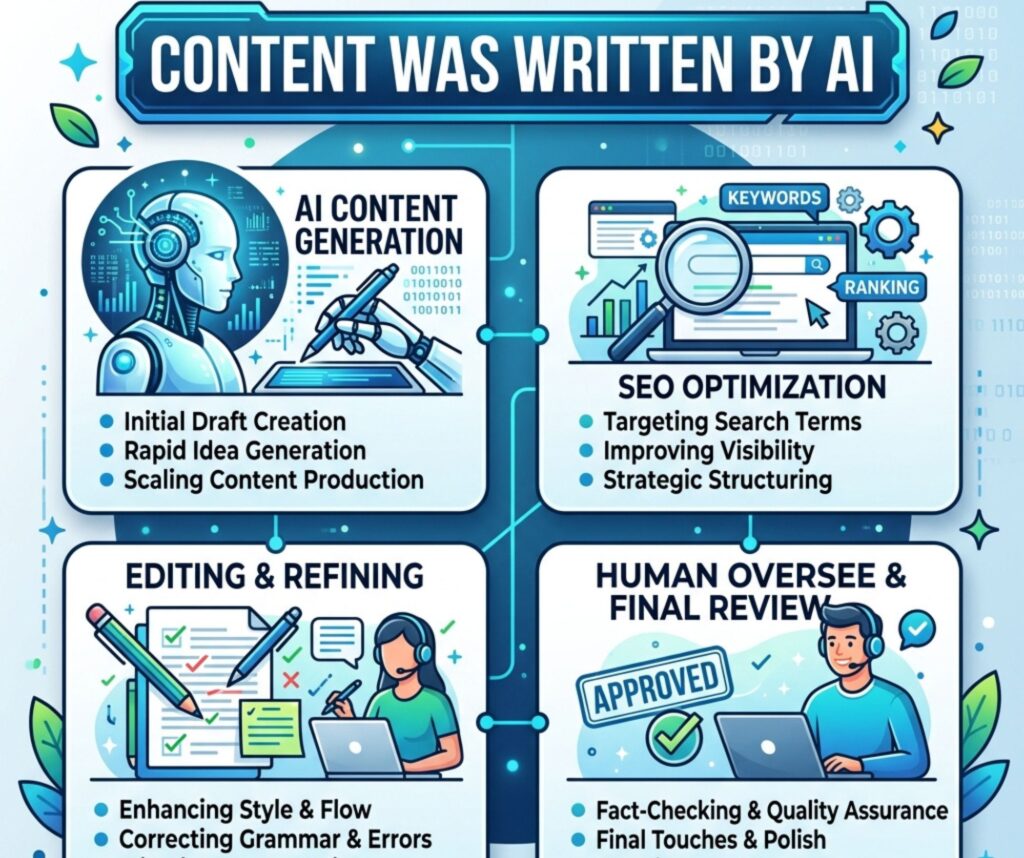
Behind every piece of content, there is usually a creation process. Sometimes that process provides clues.
Document platforms may show:
- Editing history
- Large copy-paste actions
- Few revisions
- Sudden text additions
A document created from AI may appear as one large block added instantly. Human writers usually create drafts, make changes, and improve ideas over time.
However, this method has limits. A person can edit AI content heavily. Someone can also paste human-written text quickly. Therefore, metadata should support other detection methods.
Method 6: Verify Facts, Sources, and Information Accuracy
One of the strongest ways to identify AI content is checking facts. AI systems sometimes create information that sounds correct but is completely false.
These mistakes are called AI hallucinations.
Common problems include:
| Issue | Example |
| Fake sources detection | Invented research papers |
| Wrong statistics | Incorrect numbers |
| False quotes | Made-up statements |
| Missing context | Incomplete explanations |
Always verify important claims, references, and statistics. Strong original content verification improves trust and protects readers.
Method 7: Combine AI Detection Tools With Human Review
The most reliable approach combines technology and human thinking.
A practical process looks like this:
- Scan the content with an AI detector
- Review highlighted sections
- Check writing style
- Verify facts and sources
- Evaluate originality
This combination creates better digital content verification because machines identify patterns while humans understand meaning.
Best Practices to Make AI Content More Human and Authentic
AI content becomes stronger when humans add value. Good writing needs experience, creativity, and accuracy.
Improve AI-assisted content by adding:
- Personal stories
- Expert opinions
- Original research
- Real examples
- Better explanations
The future of content is not simply AI versus humans. It is about using technology while protecting trust and quality.
Final Checklist: How to Know If Content Was Written by AI
To quickly evaluate content, ask:
| Question | Purpose |
| Does the writing feel natural? | Check authenticity |
| Are examples specific? | Measure originality |
| Are sources real? | Verify accuracy |
| Does the author show expertise? | Check human contribution |
| Does the style feel repetitive? | Identify AI patterns |
