

Snoring affects millions of people in the United States every night. It may seem harmless, yet frequent snoring can reduce sleep quality and leave both you and your partner feeling tired the next day. Many people search for How to stop snoring while sleeping naturally because they want safe and simple ways to enjoy peaceful rest. The good news is that many cases improve with healthy lifestyle changes, better sleep habits, and proper medical care when needed. Understanding What causes snoring while sleeping? is the first step toward finding the right solution. Small improvements often create a big difference in your overall health and energy.
| Quick Facts About Snoring | Details |
| Common Age Group | Adults over 30, but it can affect all ages |
| Main Cause | Narrow or partially blocked airway |
| Common Risk Factors | Excess weight, allergies, smoking, alcohol |
| Can It Be Prevented? | Often yes, with healthy habits and treatment |
| When to Seek Help | If snoring is loud, frequent, or linked with breathing pauses |
What Is Snoring and Why Does It Happen?
Snoring happens when air struggles to move freely through your throat while you sleep. This movement makes the tissues inside your airway vibrate, creating the familiar sound. The volume may range from light breathing noises to Loud snoring that disturbs everyone nearby. Many different Snoring causes can narrow your airway, making airflow less smooth. Understanding Why do people snore? helps you choose the most effective treatment instead of relying on temporary solutions.
Although many people experience Occasional snoring, others deal with Chronic snoring that happens almost every night. Frequent snoring should never be ignored because it may reduce oxygen flow and interrupt healthy sleep. It can also be connected with Obstructive sleep apnea, a serious condition that causes repeated pauses in Breathing during sleep. Learning Is snoring a sign of sleep apnea? can help you recognize warning signs before they become more serious.
Snoring vs. Sleep Apnea: Understanding the Difference
Many people confuse ordinary snoring with Obstructive sleep apnea, yet they are not the same. Simple snoring creates noise but usually does not stop breathing. Sleep apnea causes repeated breathing pauses that reduce oxygen levels during the night. Common Sleep apnea symptoms include choking during sleep, morning headaches, extreme daytime tiredness, and difficulty concentrating.
If your partner notices breathing pauses or gasping sounds, medical evaluation becomes important. Doctors may recommend a sleep study to measure oxygen levels and breathing patterns. Early diagnosis can prevent long-term health problems such as high blood pressure and heart disease. Learning When should I see a doctor for snoring? is an important step toward protecting both your sleep and overall health.
Common Causes of Snoring While Sleeping
Snoring rarely happens for just one reason. Most people experience it because several factors work together to narrow the airway during sleep. Understanding What causes snoring while sleeping? makes it easier to choose the right solution instead of guessing. Whether the problem comes from your lifestyle, body structure, or a medical condition, identifying the cause is the first step toward How to stop snoring while sleeping naturally.
Many people notice that snoring becomes worse after a long day, during allergy season, or after drinking alcohol. Others develop it slowly as they grow older or gain weight. The table below explains the most common causes and how they affect your breathing.
| Common Cause | How It Affects Snoring |
| Back sleeping | Causes the tongue to fall backward and narrow the airway. |
| Weight gain | Adds pressure around the neck, reducing airflow. |
| Nasal congestion | Makes breathing through the nose more difficult. |
| Alcohol | Relaxes throat muscles too much before sleep. |
| Smoking | Irritates and inflames the airway. |
| Sleep apnea | Causes repeated breathing pauses and loud snoring. |
Sleeping Position and Airway Collapse
Your Sleeping position has a major effect on snoring. When you sleep flat on your back, gravity pulls the tongue and soft tissues toward the throat. This reduces the space for air to pass through, making vibration more likely. Many people asking Why do I snore only on my back? discover that their sleep posture is the main reason.
Switching to Side sleeping often keeps the airway more open and reduces tissue vibration. It is widely considered the Best sleeping position for snoring because it lowers the chance of airway collapse. A body pillow or specialized sleep pillow can help you stay comfortably on your side throughout the night.
Excess Weight and Neck Fat
Body weight plays an important role in nighttime breathing. Extra fat around the neck gently presses on the airway, making it narrower while you sleep. This connection between Weight loss for snoring and improved breathing has been confirmed in many medical studies. Even losing a small amount of weight may reduce airway pressure and improve sleep.
The relationship between Obesity and snoring is especially noticeable in adults with larger neck sizes. A healthy diet combined with regular exercise can improve airflow and reduce snoring over time. This is why many people ask Can losing weight stop snoring? The answer is often yes, especially when excess weight is the primary cause.
Nasal Congestion, Allergies, and Sinus Problems
Blocked nasal passages force you to breathe through your mouth during sleep. A Stuffy nose, Nasal congestion, seasonal allergies, or sinus infections can all make snoring worse. Air struggles to move smoothly through swollen tissues, creating louder vibrations and disturbed sleep.
Simple treatments may improve airflow significantly. Saline nasal spray, allergy medication, and Steam inhalation help many people breathe more comfortably before bedtime. If symptoms continue for weeks, a doctor may check for a Deviated septum or other structural problems. Many readers searching Can allergies cause snoring? find that treating allergies reduces snoring naturally.
Alcohol, Smoking, and Sedative Medications
Lifestyle choices can increase snoring more than many people realize. Alcohol before bed relaxes throat muscles beyond their normal level, making airway collapse more likely. Sedative medications may have a similar effect, especially when taken close to bedtime.
Research also links Smoking and snoring because tobacco smoke irritates the airway and causes long-term inflammation. Swollen tissues leave less room for airflow, increasing vibration throughout the night. Avoiding alcohol several hours before sleep and quitting smoking are among the Best ways to stop snoring naturally.
Aging and Weak Throat Muscles
As people grow older, muscles naturally lose strength. The Throat muscles become less firm, making it easier for the airway to narrow during sleep. This gradual change explains why some adults begin snoring later in life even if they never snored before.
Daily Throat exercises and Tongue exercises may strengthen these muscles and improve airway stability. Although they are not an overnight cure, consistent practice may reduce mild snoring over several months. These simple activities are often recommended as effective Exercises to stop snoring.
Enlarged Tonsils and Structural Airway Problems
Some people have physical features that naturally narrow the airway. Enlarged tonsils, a low Soft palate, or poor Tongue position can reduce airflow while sleeping. These conditions may affect both children and adults, although enlarged tonsils are more common in younger people.
Persistent snoring caused by structural problems sometimes requires medical evaluation. Doctors may recommend an Oral appliance, Anti-snoring mouthpiece, or other treatments depending on the severity. Learning How to stop snoring without surgery usually begins with identifying these physical causes before considering more advanced options.
Sleep Deprivation and Poor Sleep Habits
Lack of sleep affects more than energy levels. When you become overtired, muscles relax more deeply during sleep, increasing the chance of snoring. Poor Sleep hygiene and an inconsistent Bedtime routine often make existing snoring noticeably worse.
Improving your sleep schedule can support Better sleep quality while reducing throat relaxation. Going to bed at the same time each night, limiting screen time, and creating a quiet bedroom help your body maintain healthier sleep patterns. Many people asking How can I stop snoring at night? benefit simply by improving their daily sleep habits.
Obstructive Sleep Apnea as a Major Cause
Sometimes snoring is more than a simple annoyance. Obstructive sleep apnea repeatedly blocks the airway, causing brief pauses in Breathing during sleep. These interruptions lower oxygen levels and force the brain to wake the body just enough to restart breathing.
Common Sleep apnea symptoms include loud gasping, choking sounds, daytime fatigue, morning headaches, and poor concentration. If these signs appear regularly, professional evaluation is essential. Understanding Is snoring a sign of sleep apnea? can help you recognize when ordinary snoring becomes a serious medical concern requiring prompt treatment.
How to Stop Snoring While Sleeping Naturally
Many people improve their sleep without medication or surgery. If you are wondering How to stop snoring while sleeping naturally, the answer often begins with small daily changes. Healthy habits keep your airway open and improve nighttime breathing. These methods take time, yet they provide lasting benefits for both your sleep and overall health.
Natural solutions work best when they become part of your daily routine. Better eating habits, regular exercise, and consistent sleep schedules reduce pressure on your airway. Learning How can I stop snoring at night? starts with understanding that long-term lifestyle improvements usually produce better results than quick fixes.
Sleep on Your Side Instead of Your Back
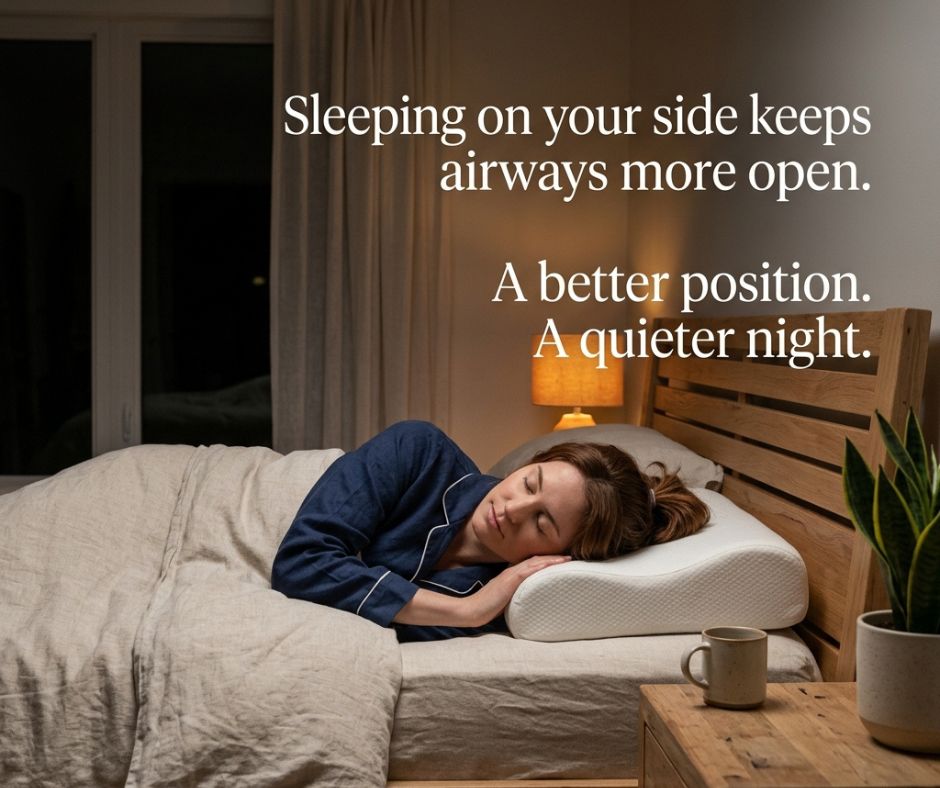
Your Sleeping position plays an important role in reducing snoring. Sleeping flat on your back allows the tongue and soft tissues to move toward the throat. This reduces airflow and increases vibration. Changing to Side sleeping is often the Best sleeping position for snoring because it helps keep the airway open throughout the night.
A body pillow or sleep position pillow can help you stay on your side until morning. Many people asking Why do I snore only on my back? notice significant improvement after changing their sleep position. This simple habit is one of the easiest ways to reduce nighttime snoring.
Lose Weight to Reduce Airway Pressure
Extra body weight places additional pressure around the neck and throat. This pressure narrows the airway and increases vibration while sleeping. Doctors often recommend Weight loss for snoring because even a modest reduction in weight may improve breathing and decrease snoring frequency.
The connection between Obesity and snoring is well documented. A balanced diet and regular physical activity support healthier breathing while improving heart health. Many people searching Can losing weight stop snoring? experience noticeable improvements after reaching a healthier weight.
Stay Hydrated Before Bed
Keeping your body hydrated helps maintain healthy airway tissues. Dehydration thickens mucus inside the nose and throat, making airflow less smooth. Drinking enough water throughout the day may reduce irritation and improve Breathing during sleep.
Many people ask Does drinking water reduce snoring? Water alone will not cure every case, yet proper hydration supports healthier airways. Limiting caffeine late in the day also helps maintain good hydration before bedtime.
Improve Your Sleep Routine
A consistent Bedtime routine supports deeper and healthier sleep. Going to bed at the same time each night helps regulate your body’s internal clock. Good Sleep hygiene also reduces overtiredness, which can make snoring worse.
Simple habits make a difference. Turn off electronic devices before bed, keep your bedroom cool, and avoid large meals late at night. These small improvements lead to Better sleep quality and may reduce snoring over time.
Avoid Alcohol Before Sleeping
Many people enjoy a drink during the evening, yet Alcohol before bed relaxes throat muscles too much. This increases airway narrowing and makes snoring louder. Avoiding alcohol for several hours before bedtime allows your muscles to maintain better support during sleep.
Reducing alcohol intake is one of the Best ways to stop snoring naturally. People often notice quieter sleep within a few nights after changing this habit.
Quit Smoking to Improve Breathing
The relationship between Smoking and snoring is stronger than many people realize. Cigarette smoke irritates the nose and throat, causing swelling that narrows the airway. Continued irritation also increases mucus production, making breathing less comfortable during sleep.
Stopping smoking improves airway health over time. Cleaner airways reduce inflammation and allow smoother breathing. Better lung function also supports healthier sleep and overall wellness.
Raise Your Head While Sleeping
Keeping your head slightly elevated helps gravity work in your favor. A supportive pillow lifts the upper body and reduces pressure on the airway. This simple adjustment may improve airflow and decrease snoring for many people.
Some people also benefit from adjustable beds that provide gentle elevation. Combining this method with Side sleeping often produces even better results for mild snoring.
Practice Tongue and Throat Exercises
Daily Tongue exercises and Throat exercises strengthen muscles that support the airway. Stronger muscles are less likely to collapse during sleep. These exercises require patience, yet many people notice improvement after several weeks.
Common exercises include pressing the tongue against the roof of the mouth, repeating vowel sounds, and gently strengthening facial muscles. These are effective Exercises to stop snoring for people with mild or moderate snoring.
Treat Nasal Congestion Naturally
When your nose is blocked, you often switch to Mouth breathing, which increases throat vibration. Treating Nasal congestion improves airflow and supports quieter sleep. A Humidifier adds moisture to dry air and helps reduce irritation inside the nose.
Many people also benefit from Steam inhalation before bedtime or using Saline nasal spray to clear the nasal passages. These simple treatments answer the common question How to open airways while sleeping by making nasal breathing easier.
Best Home Remedies for Snoring That Actually Work
Many simple treatments can reduce mild snoring without expensive equipment. The most effective Home remedies for snoring improve airflow, reduce inflammation, and support healthier breathing during sleep. While these remedies do not replace medical care for serious conditions, they often provide noticeable relief for everyday snoring.
The secret is consistency rather than perfection. Combining several Natural remedies for snoring usually works better than relying on only one solution. Small improvements made every night can lead to long-lasting changes in sleep quality.
| Home Remedy | Main Benefit |
| Steam inhalation | Opens nasal passages before sleep |
| Saline nasal spray | Clears blocked nasal passages |
| Humidifier | Prevents dry throat and nose |
| Honey with warm water | Soothes throat irritation |
| Sleeping on your side | Reduces airway collapse |
| Healthy bedtime routine | Supports deeper sleep |
FAQ’S
How to quit snoring while sleeping?
Sleep on your side, maintain a healthy weight, avoid alcohol before bed, and treat nasal congestion. If snoring continues, consult a doctor to rule out sleep apnea.
Why do I snore so bad at night?
Severe snoring can result from a blocked airway, sleeping on your back, excess weight, allergies, or obstructive sleep apnea that restricts normal airflow.
Can I train myself not to snore?
Yes. Improving sleep habits, practicing tongue and throat exercises, changing your sleeping position, and maintaining a healthy lifestyle can help reduce snoring over time.
What’s the best thing to stop snoring?
The best solution depends on the cause, but side sleeping, weight management, treating nasal blockage, and using doctor-recommended anti-snoring devices are often effective.
What does unhealthy snoring sound like?
Unhealthy snoring is usually very loud and may include choking, gasping, or pauses in breathing, which can be signs of obstructive sleep apnea and should be medically evaluated.
